When I began researching the history of JIMON GROUP, the question seemed straightforward: when was the company founded, and how did it develop? Official materials give a clear answer: “founded in 1993, 33 years of history.” Yet a search of China’s corporate registers revealed another date: 11 May 2004, when the current legal entity was registered.

This discrepancy is not necessarily an error. It is the starting point for understanding the company’s history: a journey from a small private medicinal-herb factory to a global group combining manufacturing capacity, research platforms and long-established traditional Chinese medicine (TCM) brands. This article traces that journey through available sources, distinguishes documented facts from corporate statements, and examines the decisions that helped turn a local operation into an international organisation.
At a glance
The history of JIMON GROUP follows two connected timelines:
- Commercial activity, beginning in 1993, when founder Niu Jinmu (钮金木) opened a small medicinal-herb factory in Anguo, known as China’s “millennium capital of medicinal herbs.”
- Legal consolidation, culminating in the registration of the current legal entity, 金木集团有限公司 (Jinmu Group Co., Ltd.), in 2004.
Over more than three decades, the group has moved through several major stages:
- 1993–2008: Establishment and growth—from a small factory to a pharmaceutical enterprise.
- 2008–2016: Integration of long-established brands, acquisition of historic TCM manufacturers and expansion of the product portfolio.
- 2016–present: International expansion and scientific development, including a change of leadership, construction of an industrial park, entry into overseas markets and the development of research platforms.
According to company and industry materials, JIMON GROUP now has a presence in 14 countries, an industrial park covering approximately 20 hectares, nearly 300 medicine registration certificates and partnerships with scientific institutions.
What this investigation covers
This article examines the development of JIMON GROUP from its origins to the present day. It reviews key events, decisions, acquisitions and stages of growth, focusing on how a small manufacturing operation became a broader group, how its manufacturing and research base evolved, and how the integration of established TCM brands and international expansion contributed to that change.
Separate publications examine manufacturing capacity, scientific research, individual products, the marketing system and international presence in greater detail.
Why the history matters
The history of JIMON GROUP illustrates three wider developments in the modern Chinese economy:
- The evolution of a private enterprise in traditional Chinese medicine: from small family operations to larger businesses using modern technologies.
- The combination of tradition and innovation: how long-established formulas and manufacturing practices interact with contemporary science, digital technologies and international quality standards.
- The internationalisation of Chinese healthcare companies: how local producers approach overseas markets while navigating regulatory requirements and adapting products to different jurisdictions.
Understanding this trajectory is useful not only to readers interested in JIMON GROUP, but also to those studying the TCM market and the international expansion of Chinese businesses.
The initial picture
Before a closer review, the story appeared simple: a company founded in 1993 gradually grew, expanded manufacturing and entered international markets. References to “33 years of history” and “century-old brands” seemed like familiar marketing language.
Comparing sources made the picture more complex. Different founding dates, details about historic acquisitions, shifts in strategy and leadership, and references to scrutiny and regulatory challenges emerged. These details make it possible to examine the company’s history as a research question rather than simply repeat a corporate narrative.
The main timeline: from a small factory to a global group
Stage 1. Establishment and early growth (1993–2008)
1993: the first steps in the “millennium capital of medicinal herbs”
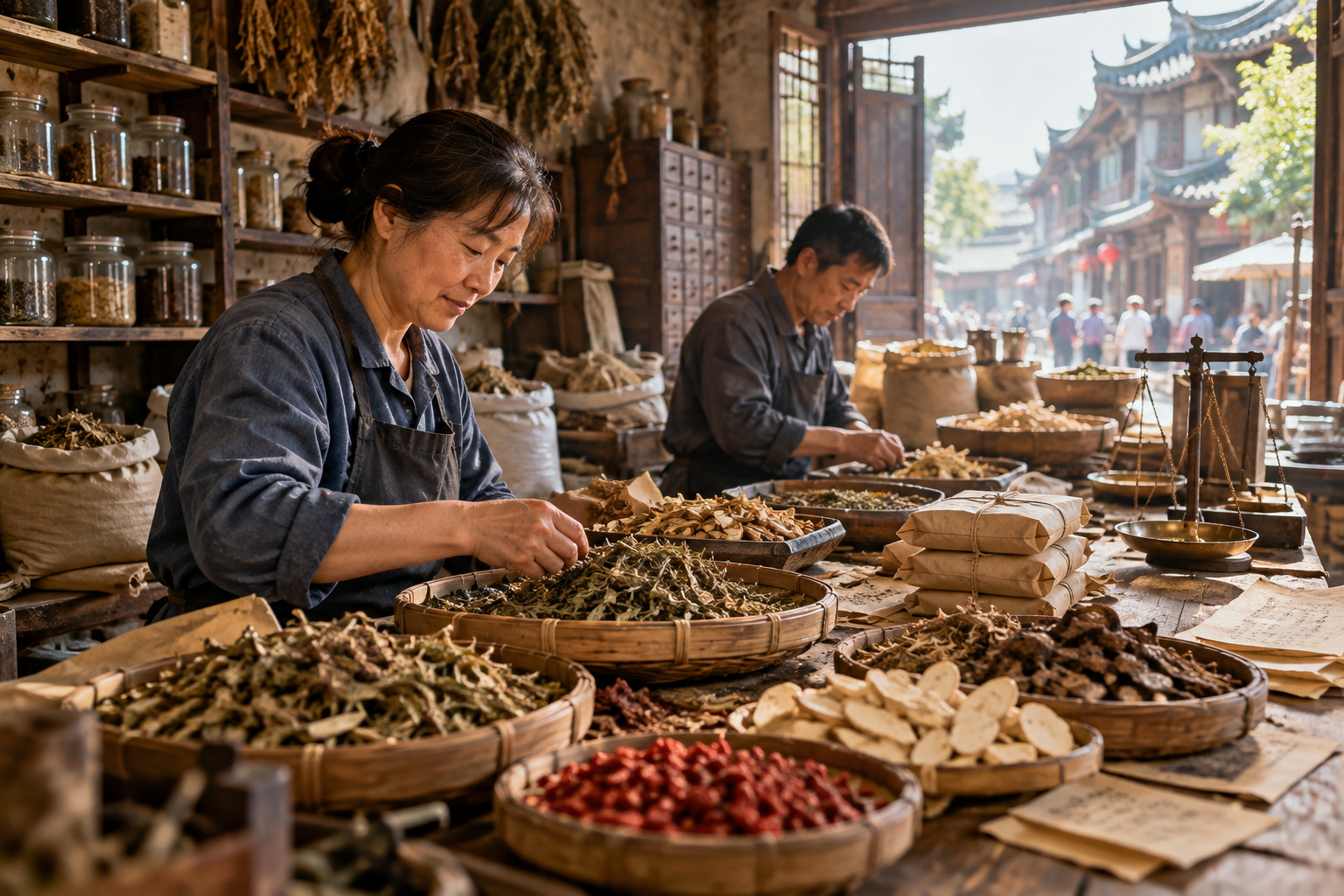
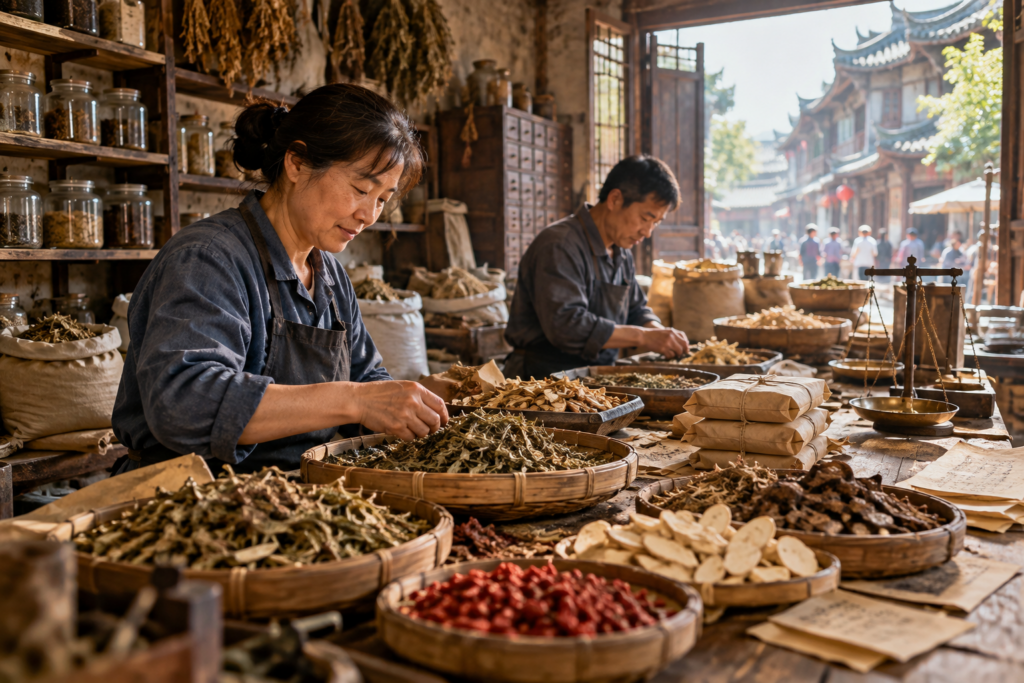
Company statement and industry sources: In 1993, founder Niu Jinmu opened a small medicinal-herb factory in Anguo, Hebei Province, named the Zhonghua Street Anguo Medicinal Herb Factory. Anguo was not an arbitrary choice: it is known in China as the “millennium capital of medicinal herbs,” a centre for trading and processing medicinal plant materials with a history of more than a thousand years.

The enterprise initially focused on producing and processing medicinal herbs and became one of the notable local producers in the region.
Author’s analysis: The location offered access to experienced workers, established herb-processing knowledge and a developed trading and logistics environment. These factors likely helped lay the operational foundations for later growth. The company’s early manufacturing capabilities were built during this period.
2003: a claimed technological milestone—a standardised borneol plant in northern China
Company statement: In 2003, the company built what it describes as the first standardised borneol (bornean camphor) production plant in northern China. Borneol is an ingredient used in traditional Chinese medicine preparations. The company states that output from the facility began to be exported to Europe, the Americas and Southeast Asia.
Borneol production requires controls over quality and safety. If the reported exports are confirmed, they would indicate that the factory had reached a level of production practice suitable for serving markets beyond its home region. The claim should nevertheless be attributed to the sources reporting it.
2004: legal consolidation
Documented fact (Tianyancha and Qichacha corporate registers): On 11 May 2004, the legal entity now known as 金木集团有限公司 (Jinmu Group Co., Ltd.) was registered. It initially operated under a different name, which was subsequently changed several times.
This is the registration date of the current legal entity. The difference between 1993 and 2004 reflects a distinction commonly seen in business histories: commercial activity can begin before a later corporate structure is formally registered or consolidated. See the review of JIMON GROUP’s official documents.
2006: formation of the pharmaceutical business
Documented fact: Hebei Jinmu Pharmaceutical Co., Ltd. (河北金木药业有限公司) was established in 2006 and later became a foundation of the group. This marked a shift from producing individual ingredients towards a broader pharmaceutical business.
2008: a major acquisition and the integration of a historic brand
Documented in industry sources and the acquired company’s history: In 2008, the company reportedly invested more than RMB 60 million to acquire Baoding Chinese Medicine Pharmaceutical Co., Ltd. (保定中药制药有限公司), an enterprise with a long history.
Baoding Chinese Medicine traces its lineage to Tianjin Lerentang, established in 1921 by a descendant of the founder of Tongrentang, one of the best-known historic TCM brands. A separate enterprise was established in 1936 and later became Baoding Chinese Medicine Pharmaceutical.
The acquisition had several strategic implications:
- Access to hundreds of classical TCM formulas.
- Integration of production expertise and staff with years of experience.
- An expanded portfolio that included medicines well known in China.
Author’s analysis: The year 2008 appears to have been a turning point. Before the acquisition, JIMON GROUP was a successful but primarily local producer. Bringing Baoding Chinese Medicine into the group did more than expand the business: it added a historical dimension that later became an important part of the company’s identity. It gave the group a basis for presenting itself not only as a newer enterprise, but also as a steward of long-established TCM traditions.
Stage 2. Integration and expansion (2009–2015)
2009: recognition at provincial level
Company statement: In 2009, the company’s trademark received the status of a “well-known provincial trademark” in Hebei Province. This was described as the brand’s first formal recognition at the regional level.
2015: a direct-selling licence and a new distribution channel
Documented fact (Ministry of Commerce of China): In 2015, the company received direct-selling licence No. 71 from China’s Ministry of Commerce. The licence allowed it to operate under a direct-selling model in China.
Such a licence is a significant regulatory step because direct selling is subject to state oversight in China. Its issuance indicates that the company met the relevant requirements at the time, although the licence itself does not establish the performance or conduct of every distributor.
Author’s analysis: Direct selling opened a new distribution channel for JIMON GROUP. Instead of relying exclusively on conventional retail, the company could build a network of independent partners. That model offered a way to expand geographically within China and, later, beyond it. At the same time, direct selling can attract criticism and regulatory scrutiny, issues that should be examined separately rather than ignored in a company history.
Stage 3. Leadership change and global transformation (2016–present)
2016: new leadership and a new strategy
Documented fact: In August 2016, Niu Liwei (钮立卫) became chairman of the board. The leadership change coincided with China’s “Healthy China 2030” programme, which identified the broader health industry as a national priority.
The group adjusted its strategy around a “dual core”: traditional Chinese medicine and the broader health sector. This approach meant developing not only conventional pharmaceutical manufacturing but also products and services for the wider health and wellness market.
In the same year, the company officially changed its name to 金木集团有限公司 (Jinmu Group Co., Ltd.), the name it uses today.
2016–2019: the industrial park and further acquisitions
Company statements and industry sources: Under Niu Liwei, construction began on the Jinmu International Industrial Park in Anguo. The site covers 305 mu (approximately 20.3 hectares) and was described as combining modern production lines, research laboratories, a quality-control centre and an exhibition complex devoted to TCM.

During the same period, the company acquired Beijing Yubentang Holding Group (北京御本堂控股集团), another enterprise in the TCM sector with a historic background.
In 2019, the industrial park reportedly received the designation of a national demonstration base for TCM tourism and an AAA-rated tourist attraction. This extended the site’s role beyond manufacturing to include public education about TCM and engagement with visitors and partners.
2024: further integration of historic brands
Documented in industry media: In 2024, the company entered a strategic cooperation agreement with Hebei Anguo Pharmaceutical Group Co., Ltd. (河北安国药业集团有限公司), an enterprise whose history reportedly dates to 1957, when it was formed by bringing together 49 historic pharmacies and medicinal workshops in Anguo.
By this point, three major historic TCM businesses were associated with JIMON GROUP’s portfolio:
- Baoding Chinese Medicine Pharmaceutical, with a lineage dating to the 1920s and 1930s.
- Beijing Yubentang.
- Hebei Anguo Pharmaceutical Group.
Company statement: In September 2026, the company announced the acquisition of another historic brand, Yishoutang (颐寿堂), whose history it describes as spanning 450 years. If independently confirmed, this would bring the number of historic enterprises in the group to four. See the documentary review of the “450 years” claim.
Author’s analysis: Integrating established brands is not merely a way to broaden a product portfolio. It can also create a competitive advantage based on accumulated reputation, tradition and consumer trust—assets that may take decades or centuries to develop. Combined with contemporary manufacturing and scientific work, this historical capital could distinguish the group from competitors. The scale and legal details of each acquisition, however, should be verified independently.
2025: research development and technology partnerships
Reported developments:
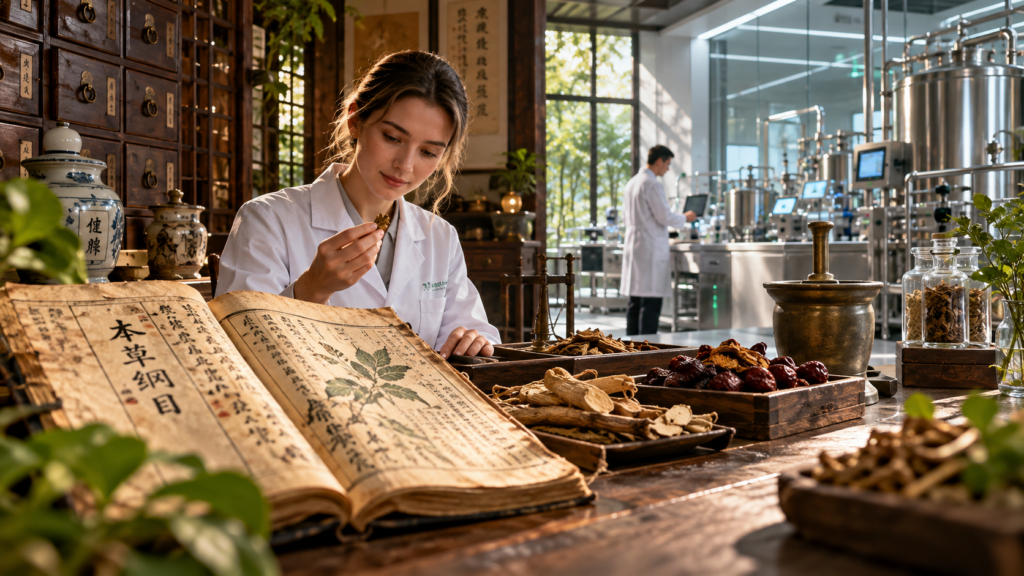
- In 2025, the company signed a strategic cooperation agreement with Shanghai SUPER LAB, described as a major Chinese research platform in biotechnology and medicine.
- In March 2025, Professor Takeda Taku of the Institute of Oriental Medicine at Kindai University in Japan visited the international industrial park to discuss scientific cooperation.
These events were presented as a step towards a more research-driven stage of development, rather than manufacturing alone. The scale and results of the partnerships should be assessed through project records and publications as they become available.

2026: international expansion
The year 2026 was described as a period of active international expansion:
- January: The company celebrated the brand’s 33rd anniversary, counting from the opening of the first factory in 1993.
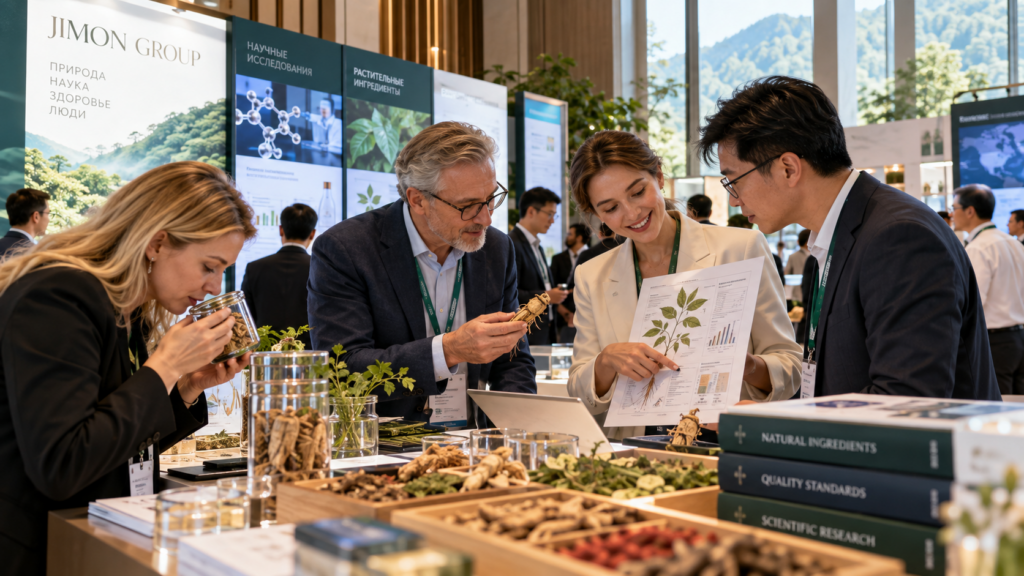
- March: An agreement was signed with AAA International Group to develop international markets through a “herbs plus cellular technologies” model.
- April: An agreement was made with China Inspection and Certification Group (South America) on quality control, testing and product promotion in Latin American markets. Plans were announced for a laboratory in Argentina to test rare medicinal ingredients and introduce products based on bovine bone peptides.
- May: An operating centre officially opened in Kuala Lumpur, Malaysia, a step intended to strengthen the group’s presence in Southeast Asia.
- July: A strategic agreement was signed with the Vietnamese pharmaceutical company Tho Sinh Duong to promote products in Vietnam. The same month, the company announced a joint Institute of Natural Musk Technology with the Qinghai New Silk Road Hui Medicine Research Institute, intended to address a shortage of one of TCM’s valuable and rare ingredients.
- September: Chairman Niu Liwei led a delegation to the Korea Ginseng Corporation (KGC) for discussions about possible cooperation with the Cheong Kwan Jang brand. The company’s Argentine unit also took part in an international traditional-medicine conference in Seoul.
According to the company website and industry sources, as of September 2026 the group had a presence in 14 countries, including Singapore, South Korea, Japan, Australia, Canada, Indonesia, Malaysia, Slovakia, Vietnam, Russia, Kazakhstan and Argentina, among others. The full list and the meaning of “presence” may differ by market and should be checked against current primary records.
Facts and documents: key historical milestones
- Date
- 1993
- Status
- Company statement, also reported by industry sources
- Source cited in the review
- Company website, BOSS Zhipin and industry media
- Date
- 2003
- Status
- Company statement, also reported by industry sources
- Source cited in the review
- Company website and BOSS Zhipin
- Date
- 11 May 2004
- Status
- Documented fact
- Source cited in the review
- Tianyancha and Qichacha corporate registers
- Date
- 2006
- Status
- Documented fact
- Source cited in the review
- Corporate registers
- Date
- 2008
- Status
- Documented in industry media and the acquired company’s history
- Source cited in the review
- Industry media and company history
- Date
- 2015
- Status
- Documented fact
- Source cited in the review
- China’s Ministry of Commerce
- Date
- August 2016
- Status
- Documented fact
- Source cited in the review
- Economic publications and industry media
- Date
- 2016
- Status
- Company statement, also reported by industry sources
- Source cited in the review
- Company website and industry media
- Date
- 2019
- Status
- Company statement, also reported by industry sources
- Source cited in the review
- Company website and industry media
- Date
- 2024
- Status
- Reported as a documented development
- Source cited in the review
- Industry media
- Date
- 2025
- Status
- Company statement, also reported by industry sources
- Source cited in the review
- Official announcements
- Date
- May 2026
- Status
- Reported as a documented development
- Source cited in the review
- Industry media
- Date
- July 2026
- Status
- Reported as a documented development
- Source cited in the review
- Official announcements by the parties
- Date
- September 2026
- Status
- Company statement; independent verification required
- Source cited in the review
- Company announcements
What can be stated with confidence
Based on the sources cited in this review, the following points can be stated with reasonable confidence:
- Commercial activity in medicinal herbs and TCM is reported to date back to 1993.
- The current legal entity was registered in 2004.
- The company progressively integrated historic TCM manufacturers, most notably Baoding Chinese Medicine Pharmaceutical, whose lineage reaches back to the 1920s and 1930s.
- The company received a direct-selling licence in 2015, which became an important distribution channel.
- From 2016, under the new chairman, the company pursued international expansion and scientific development.
- Company and industry sources report a presence in 14 countries, a substantial manufacturing base and growing scientific partnerships.
What the company claims
Several statements need further independent verification:
- The exact history and legal status of all four “historic brands” associated with the group, particularly the recently announced acquisition of Yishoutang, said to have a 450-year history.
- Financial performance and sales volumes at different stages of the company’s development.
- A complete list of acquired enterprises and their current legal status.
- Product-effectiveness claims made in marketing materials.
What remains unknown
- What financial and organisational results did the company achieve at each stage of its history?
- How were acquired historic businesses integrated, and to what extent were their manufacturing practices and experienced staff retained?
- What is the full history and legal status of the recently announced Yishoutang acquisition?
- How did regulatory challenges and criticism evolve over time, and what effect did they have on the company’s strategy?
- Which products and technologies will shape the next stage of the company’s development?
Author’s interpretation: three decisions that shaped JIMON GROUP
The chronology points to three strategic decisions that helped transform a local operation into a global group.
1. The 2008 acquisition of Baoding Chinese Medicine Pharmaceutical
This decision did more than expand the business; it changed the company’s identity. Before 2008, JIMON GROUP was another medicinal-herb producer. The acquisition gave it access to longstanding traditions, classical formulas and a reputation that cannot be created from scratch in a few years. It laid the groundwork for later positioning the group as a custodian of TCM heritage.
2. The direct-selling licence in 2015
This regulatory milestone opened a new distribution channel and helped accelerate growth. Direct selling enabled the company to expand its geographical reach without investing heavily in conventional retail infrastructure, first within China and later in other markets. It also brought risks associated with the regulation of this business model, which varies by jurisdiction.
3. The strategic shift under Niu Liwei from 2016
The new leadership aligned the company with China’s growing “big health” sector, moving beyond a narrowly pharmaceutical focus towards two connected directions: classical TCM and products or services for a broader wellness market. At the same time, the group pursued international expansion and a stronger research base. This strategy helps explain the business model described in company materials today.
Why this history matters for understanding JIMON GROUP
The company’s history is more than a sequence of dates. It helps explain its present identity and strategy:
- Its connection with Anguo explains the company’s integration into the traditions of TCM.
- The integration of historic brands helps explain its positioning as a custodian of traditional knowledge rather than simply a modern start-up.
- The direct-selling licence helps explain aspects of its marketing model and distribution channels.
- The strategy adopted in 2016 helps explain the current emphasis on international expansion and scientific development.
Without this historical context, it is difficult to assess the group’s manufacturing capacity, product portfolio, scientific ambitions or future plans in a balanced way.
Final synthesis
This review shows that JIMON GROUP’s history is more complex than the standard corporate description “founded in 1993, 33 years of history.” It is a journey from a small private factory in a historic centre of Chinese pharmacy to a global group with three overlapping dimensions:
- Historical: through the integration of long-established brands, the group has become associated with TCM traditions developed over decades and centuries.
- Manufacturing: its own facilities, industrial park and claimed control of the supply chain from plantations to finished products form the operational dimension.
- Contemporary: scientific partnerships, international expansion and adaptation to modern markets and standards define its current direction.
The initial discrepancy between 1993 and 2004 is therefore not necessarily a contradiction. It reflects two different milestones: the start of commercial activity and the formal registration of the legal entity that continues to develop today.
Open questions for further research
- What are the verified histories and legal statuses of all four “historic brands” associated with JIMON GROUP?
- How were acquired enterprises integrated, and which elements of their traditions were retained?
- How did regulatory challenges and criticism develop, and how did they influence the group’s strategy?
- What financial and operating indicators are available for each stage of the company’s development?
- Which products and technologies will underpin JIMON GROUP’s next five to ten years?
Sources
- Official website of 金木集团有限公司 (Jinmu Group Co., Ltd.), including the company-introduction section (走进金木) and news archive: Sourcejinmujituan.cn.
- Tianyancha corporate register: profile of 金木集团有限公司.
- Qichacha corporate register: development information for 金木集团有限公司.
- BOSS Zhipin platform: company history and development description.
- 经济网 (Economic Network), “金木集团:做新时代的杏林 ‘耕者’,” September 2024.
- 中国品牌发展网 (China Brand Development Network), article on chairman Niu Liwei and the company’s development, March 2026.
- 直销报道网 (Direct Selling Report Network), reports on corporate events in 2026.
- 直销行业网 (Direct Selling Industry Network), report on the opening of the operating centre in Malaysia, May 2026.
- Sohu industry articles on the company’s development and brand integration.
- Documents of China’s Ministry of Commerce relating to the direct-selling licence.
Related JIMON GROUP investigations
- JIMON GROUP’s manufacturing system: from plantations to the international industrial park.
- JIMON GROUP’s research base: academic workstations, partnerships and documented research.
- Historic brands within JIMON GROUP: history, formulas and present-day significance.
- JIMON GROUP’s international presence: strategy for entering global markets.
- JIMON GROUP’s marketing system: structure, regulation and differences between countries.
Editorial note
This article is an independent investigation. The website is not an official representative of JIMON GROUP and receives no funding from the company. Statements are distinguished as documented facts, company claims or author analysis. We aim for accuracy and will update this article as new, verifiable information becomes available.
Research keys
Browse the topic archives for this article.