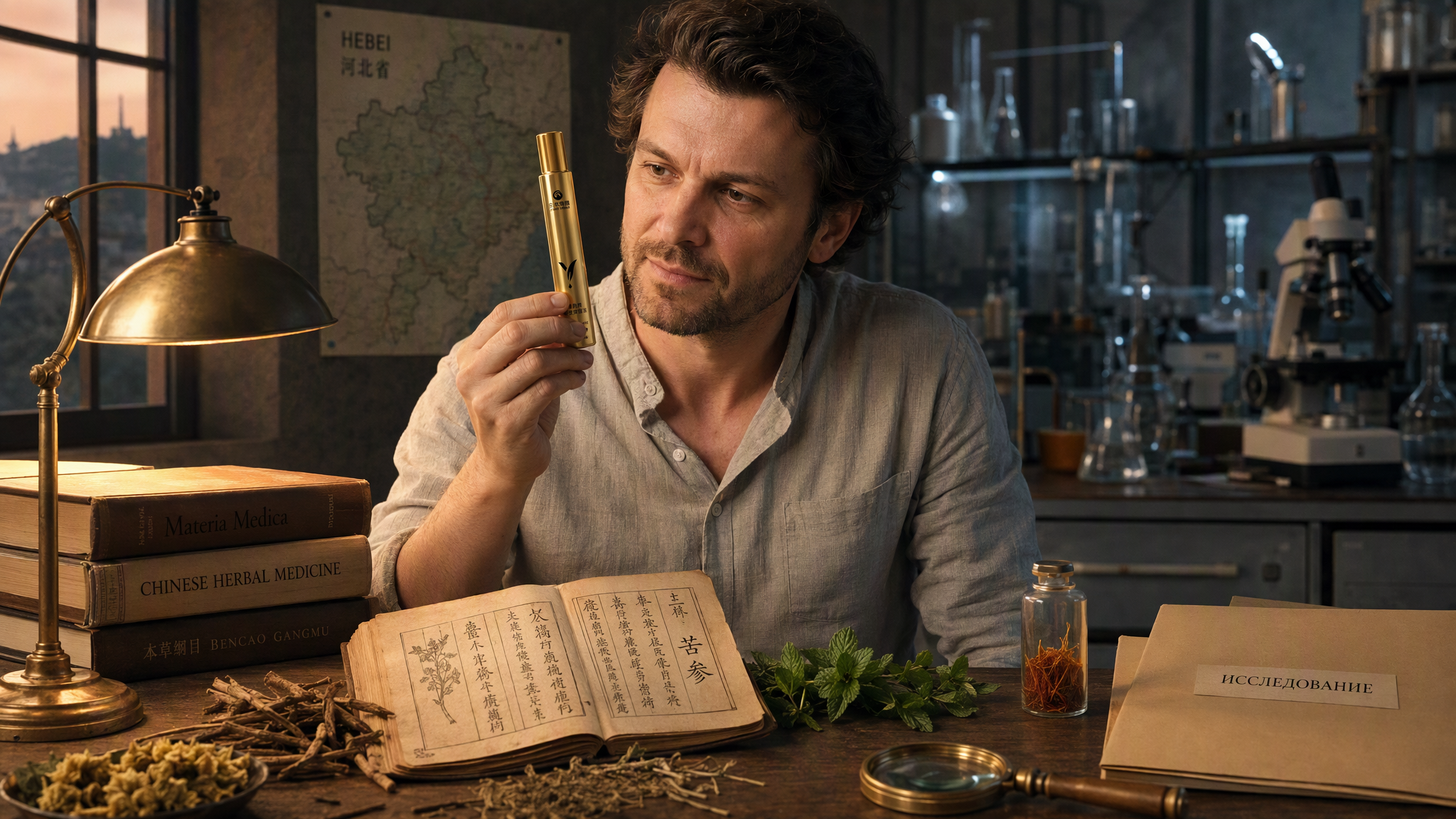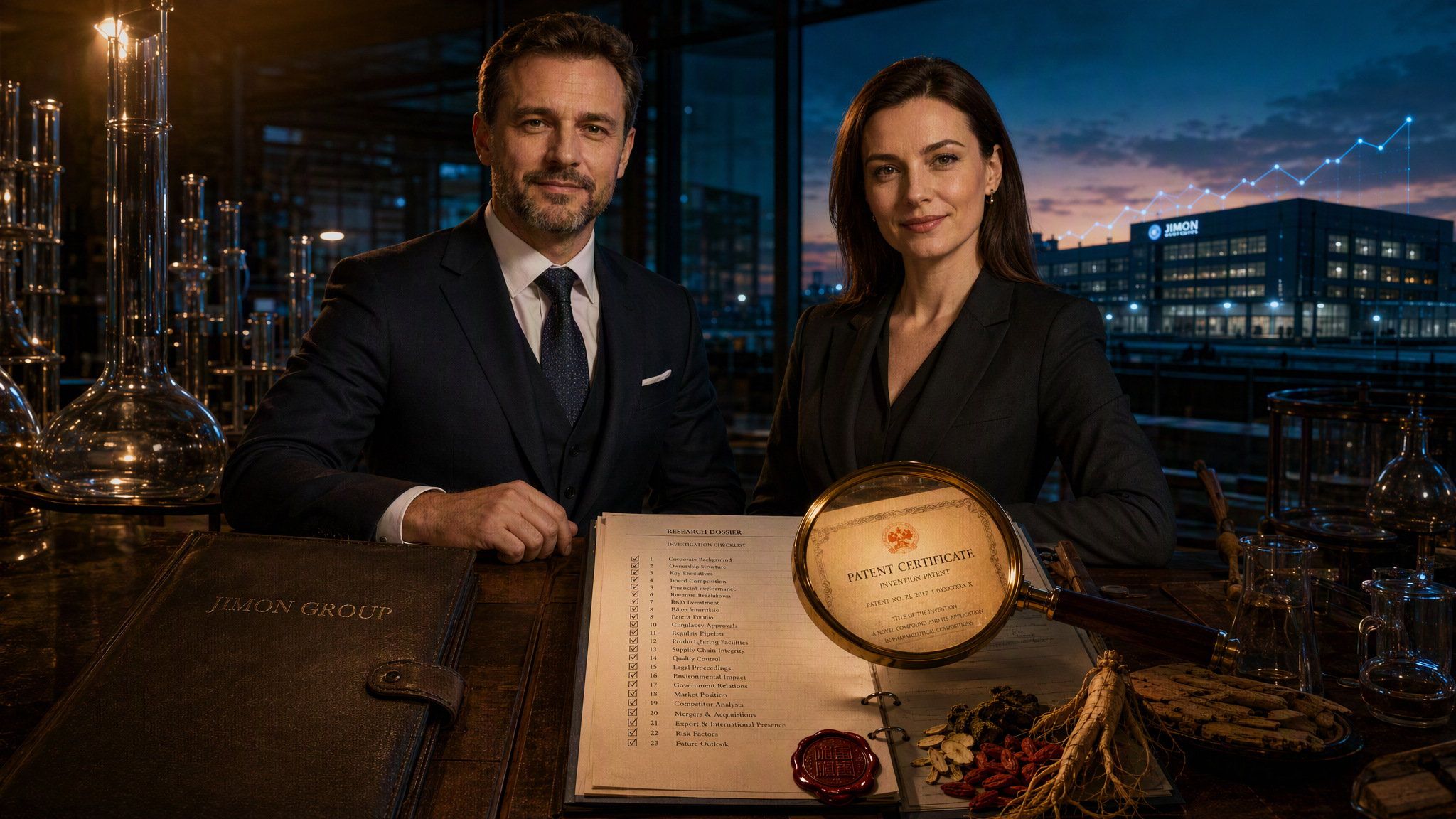
When I began exploring what JIMON GROUP could mean for Germany, the first answer seemed obvious. A large market. Affluent consumers. Steady demand for everything connected with health. But the deeper I went into the figures and documents, the clearer it became that the real question was quite different.
The question is not whether Germany will like China. The question is what will happen when a thousand-year-old tradition of Chinese medicine meets the German culture of precision, quality and evidence. That is the subject of my new video investigation. This article explains what you will see in it and why it is worth watching in full.
The paradox I did not expect to find
Germany’s wellness market is one of the largest in Europe. Five billion dollars a year is spent on dietary supplements alone, and the market is growing by more than seven per cent annually.
But then it gets more interesting. Around 70 per cent of Germans have used traditional or complementary health practices at least once. Some 50,000 doctors incorporate elements of traditional Chinese medicine into their practice, TCM and acupuncture clinics see two million patients a year, and insurance companies—even in a country that requires documentation for everything—cover acupuncture for chronic pain.
Here is the paradox at the centre of this investigation: in a market with such a mature interest in traditional medicine, there is still no major player that brings together the depth of the authentic Chinese medical tradition and modern manufacturing standards in a way that German consumers can understand. In the video, I explain why this gap has emerged and who can close it.
Not advertising—documents
I deliberately avoided calling the company “excellent” in this video. Instead, I show viewers what I found in registers and official documents.
The company traces its history back to 1993 in Anguo, a Chinese city known as the “Medicine Capital”. Four pharmaceutical brands, each with its own history of 125, 335, 357 or even 450 years, are united under the JIMON brand. The company’s own medicinal-herb plantations cover around 6,000 hectares. It has international GAP, GMP, GSP, GLP and GCP certificates, more than thirty government patents and over a hundred registered dosage forms.
For a German audience, these are more than impressive-sounding words. They describe familiar benchmarks: certificates, patents, in-house manufacturing and control from seed to finished product. In the video, I pause at each of these points and explain why it matters specifically for Germany.
A bridge between two worlds
A separate part of the video examines how the mechanism that links tradition with modern standards works. JIMON does not reduce ancient formulas to “miracle pills”; it subjects them to modern production controls and certification.
We look at cordyceps, which Chinese medicine has valued for centuries as an adaptogen, and herbal complexes containing green tea, lotus and gynostemma. The official documentation uses a precise formulation: “helps regulate blood lipids”. No promises of eternal youth. Only what is supported by documents and tradition. And that restraint is the most persuasive argument for a German audience.
Four axes for evaluating any country
In the video, I bring the analysis together in a practical framework with four axes. It can be applied to any market, not just Germany:
— Need. Germany is ageing: one in five residents is over 65. People want to live longer—and live well.
— Access. Direct selling is entirely legal in Germany when income comes from genuine products rather than recruitment; 81 per cent of the population shops online.
— Differentiation. Amway, Herbalife, PM International and Vorwerk are already active in the market, but the niche built around the depth of authentic Chinese medical tradition remains relatively open.
— Execution. Localisation, a team and tools. My team and I are already preparing this part within Jimon 168.
An honest look at the challenges—what a presentation will not tell you
If I said everything would be perfect, that would be advertising, not research. The video therefore includes a separate section on risk: cultural barriers and distrust of unsupported claims, strong competition, the need for deep local adaptation, and strict EU regulatory requirements governing product claims.
I name these challenges not to frighten anyone, but to make one point clear: this is not easy money. It is an opportunity for people who are prepared to work, learn and build trust through documents, certificates, facts and sound reasoning.
Why now?
The final part of the video examines the so-called window of opportunity. Interest in TCM is growing in Germany, and competitors with a comparable depth of Chinese medical tradition have yet to establish a position in this niche. Someone who enters while this opportunity is taking shape, backed by a strong product foundation, is in a fundamentally different position from someone who arrives three years later.
I will not promise that there will never be another chance. But the video explains how different the path is for someone who enters this story not by believing in a miracle, but by asking questions, checking things carefully and wanting to understand.
Watch the full video investigation above. I do not promise an easy path, but I do promise a deep intellectual journey in which you will understand that you are standing on something real.
If, after watching, you have questions about the documents, market or framework, ask me directly. Sometimes one good question becomes the beginning of the next investigation.
Research keys
Browse the topic archives for this article.