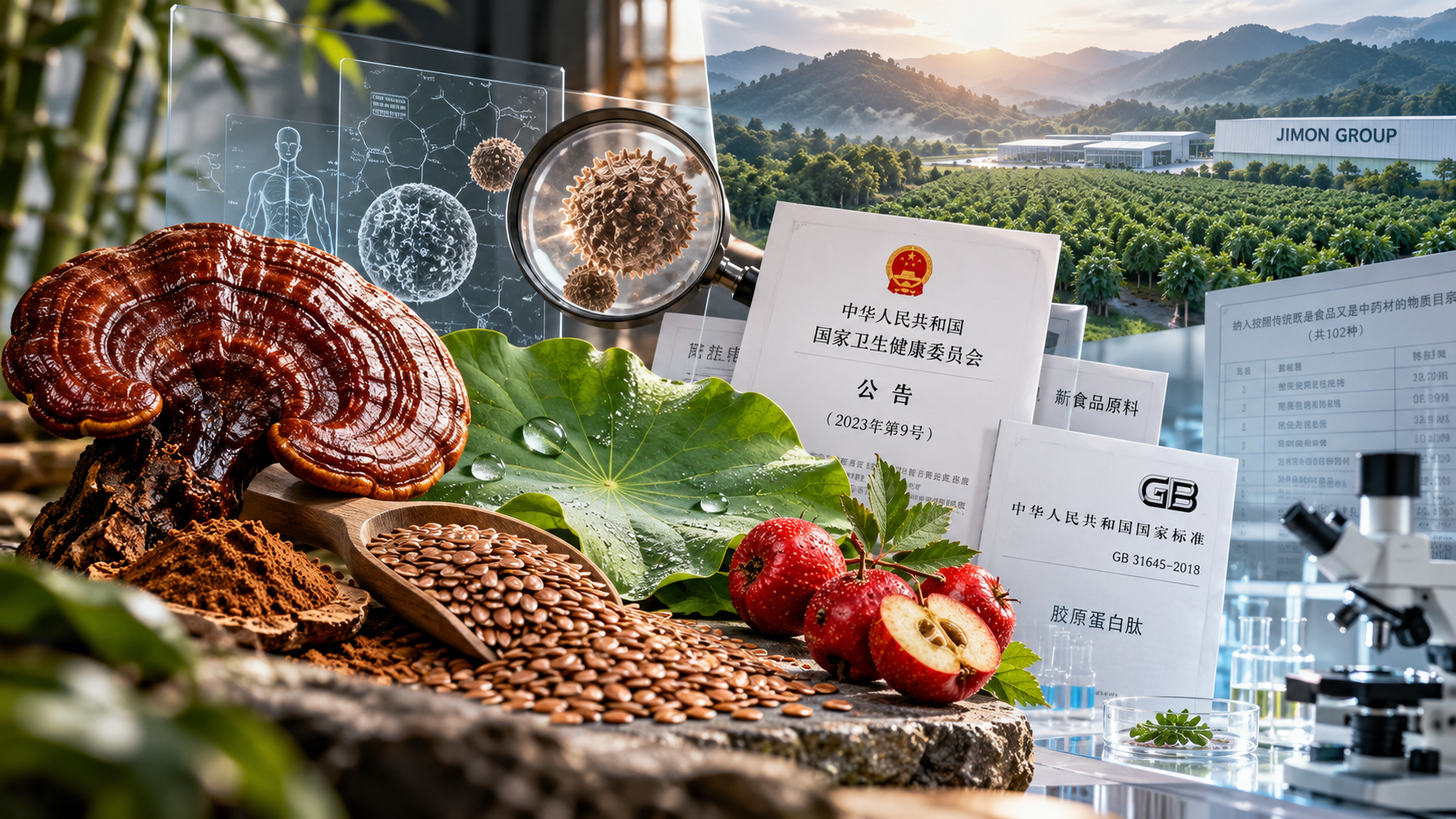
I began this investigation with a list of JIMON GROUP direct-selling products and one deliberately simple question: what is actually inside them? Not what a brochure or distributor presentation says, but what can be checked against ingredient records. The most defensible approach was to select the ingredients most relevant to the product range and compare them with Chinese government lists, national standards and scientific literature—using primary Chinese-language sources wherever possible.
The result was more interesting than I expected. Many ingredients can be connected to specific public documents: China’s list of substances traditionally used as both food and Chinese medicinal materials, National Health Commission announcements for new food ingredients, or mandatory national food-safety standards. That does not make the products medicines, and this article will maintain that boundary throughout. It does mean the regulatory status of many ingredients is open to examination rather than resting only on marketing language.
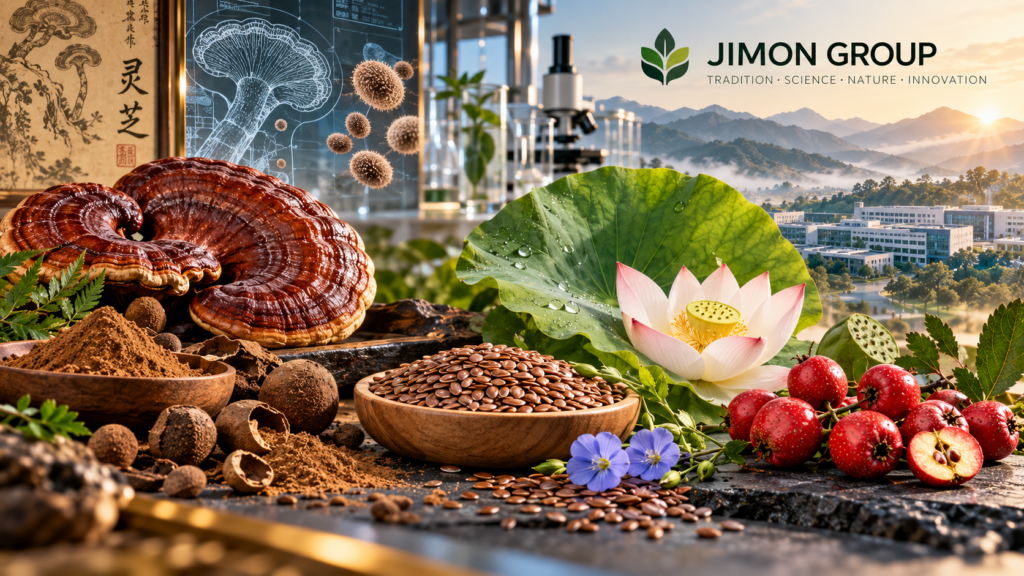
The short answer is that the ingredients examined here fall into three documentable groups: traditional substances recognised in China for both food and medicinal-material use; newer food ingredients authorised by the state in recent years; and ingredients covered by national quality standards. The sections below describe what the available records establish about their origins, properties and use—and where verified facts end and company statements begin.
How the product range and its ingredients can be checked
First, a little context about the range. JIMON GROUP (金木集团), based in Anguo, Hebei, operates a direct-selling business in China. The Ministry of Commerce information system and contemporary reports identify 19 November 2015 as the date on which the group obtained its direct-selling licence. Industry reporting describes its “big health” (大健康) segment as comprising more than 60 licensed items across health-food, cosmetics and medicine-food categories. At the 89th China National Pharmaceutical Trade Fair in 2024, industry coverage highlighted products such as Jinmu lingzhi spore powder, Shanlineng flaxseed and bone-collagen peptide formulas, and the Xuelancao cosmetics line.
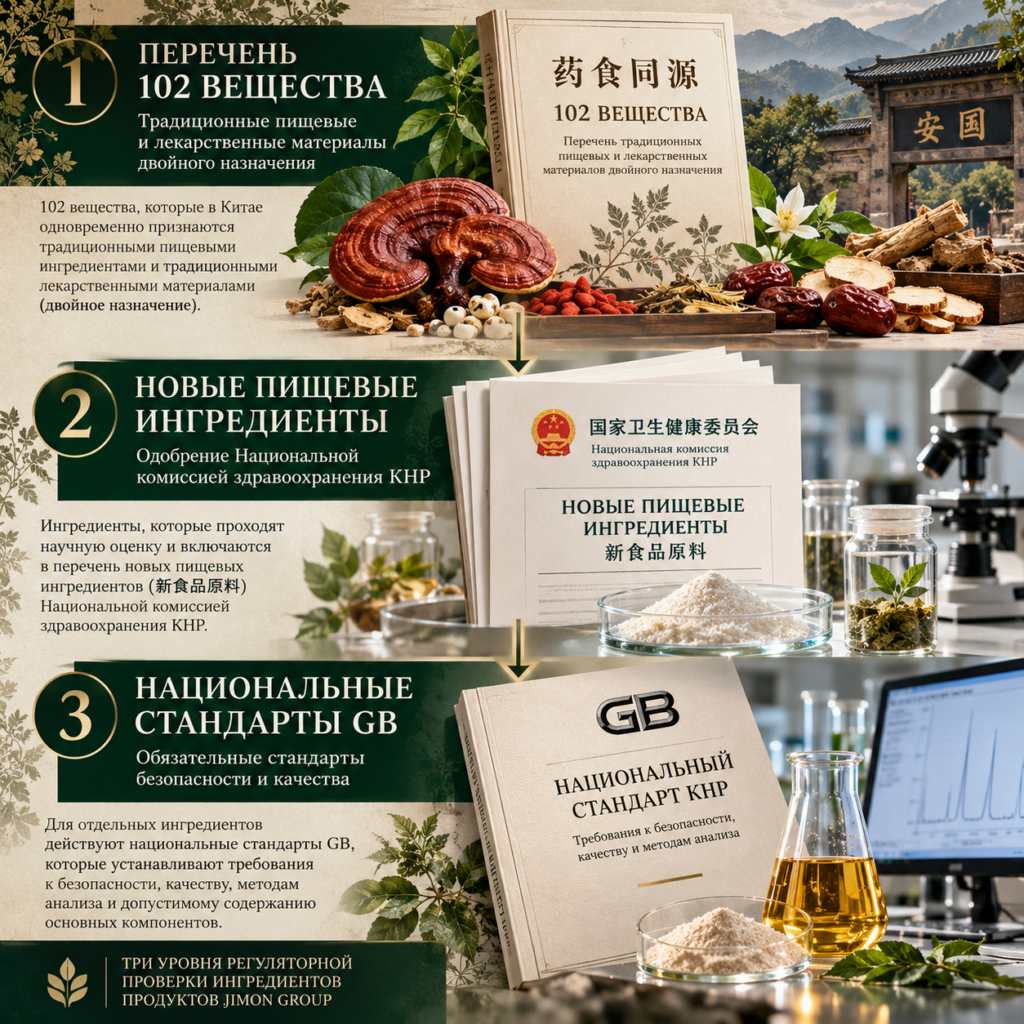
I used four kinds of source to check ingredient status:
Tool record — the dual-use substances list. China’s catalogue of substances “traditionally used as both food and Chinese medicinal materials” (按照传统既是食品又是中药材的物质目录) contains 102 entries in the list discussed here, issued by the National Health Commission and the State Administration for Market Regulation. Inclusion means the substance has a defined place in Chinese materia medica and a recognised history of food use; it does not authorise every possible formulation, dose or claim.
Tool record — new food ingredient announcements. National Health Commission announcements for “new food raw materials” (新食品原料) identify the permitted source and production process, recommended intake, use limits and groups for whom the ingredient is unsuitable. These conditions are part of the authorisation, not optional fine print.
Tool record — national GB standards. Mandatory national food-safety standards establish measurable requirements where a standard applies. In such cases, compliance is not simply a voluntary marketing promise; it can be assessed against the standard and relevant test results.
Tool record — the Chinese Pharmacopoeia and scientific journals. The Chinese Pharmacopoeia records traditional medicinal-material descriptions and functions. Scientific publications examine composition and possible biological effects. Neither source should be treated as a substitute for evidence on the finished product as sold.
Lingzhi: a mushroom recognised for food use as well as traditional use
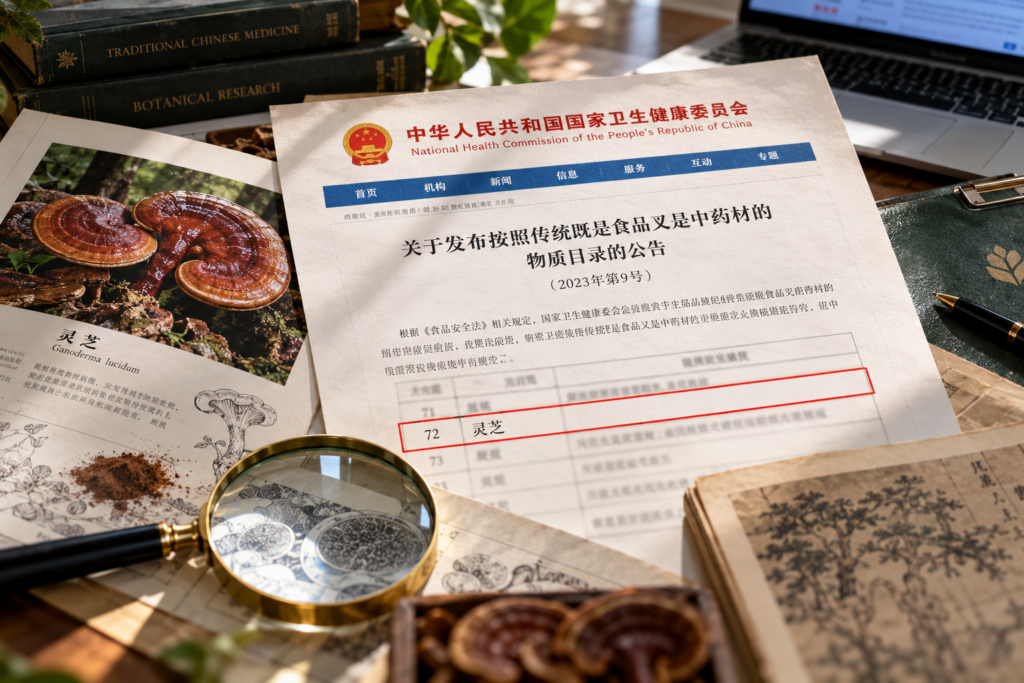
The first key ingredient is lingzhi (灵芝, Ganoderma lucidum), particularly the spores used to make powder in the JIMON product range.
The traditional description is documented in the Chinese Pharmacopoeia, which describes dried fruiting bodies of chi-zhi or zi-zhi and records traditional functions such as supporting qi, calming the spirit and relieving cough. The more recent regulatory step is especially relevant: under Announcement No. 9 of 2023, the National Health Commission and the market regulator added lingzhi to the catalogue of substances recognised for both food and medicinal-material use, following a safety assessment and pilot production. The change gave lingzhi a defined food-use status under the conditions set by the authorities.
The technology of processing the spores is another part of the story. A lingzhi spore has a double chitin-rich wall that is difficult for the human digestive system to break down. Chinese-language studies have examined “wall-breaking” processing (破壁) and differences in measured components before and after treatment. One comparative study cited in the source material reported a change in measured polysaccharide content from 0.67% to 5.42% after processing, with a substantial difference in ergosterol yield as well. Such findings concern the tested material and method; they should not be generalised automatically to every commercial batch or product.
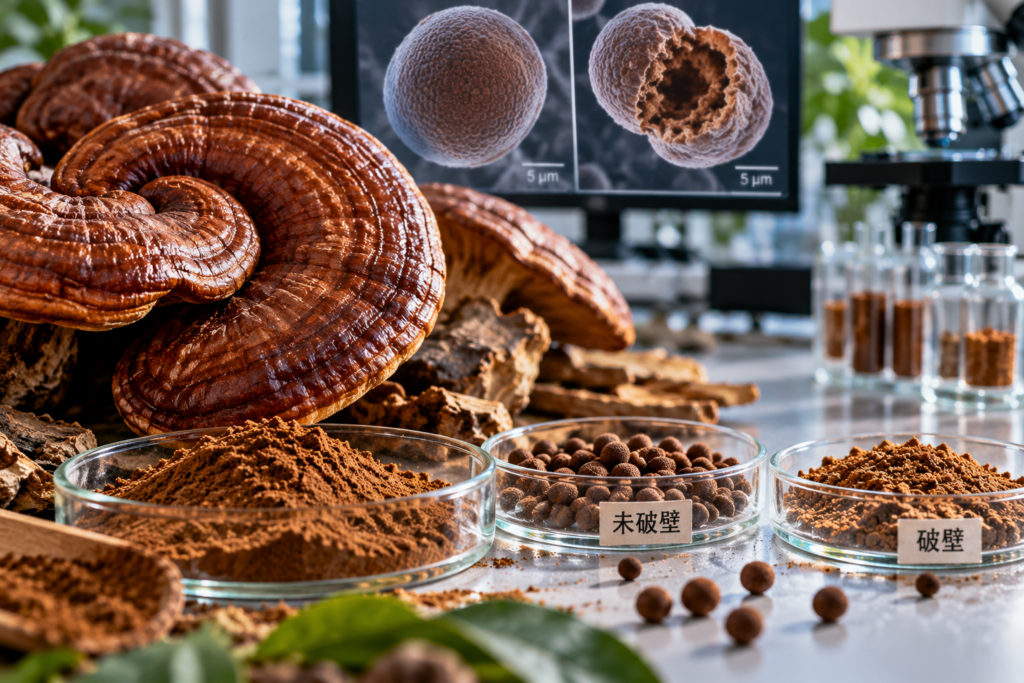
This is why the term “wall-broken spore powder” appears throughout the category. CIRS analysis reported that 160 new health-food products based on wall-broken lingzhi spores were registered in China in the first half of 2024. The permitted functional wording reported for this product category was limited to “helps support immune function”.
The boundary is essential. Researchers study lingzhi polysaccharides and triterpenes in relation to immune modulation and other biological effects, but laboratory or cell findings are not the same as clinical proof of treatment. Claims that spore powder cures disease would go beyond the evidence described here. In this category, a product registered as health food is not a medicine. I also could not independently retrieve the specific registration number for Jinmu lingzhi from the available search results, so I will not invent one. Checking the exact registration in the SAMR database remains a separate research task.
Flaxseed: an ingredient examined by nutrition science
The second major ingredient is flaxseed (亚麻籽), used in the Shanlineng flaxseed and collagen-peptide powder formula (膳力能亚麻籽胶原蛋白肽粉).
If lingzhi is an example of an ingredient moving from traditional medicinal use into a defined food category, flaxseed illustrates the reverse direction of attention: an ordinary food that nutrition science has examined as a functional ingredient. In June 2025, Xinhua summarised an expert consensus on flaxseed oil. Researchers screened more than 2,000 publications from a 20-year period and selected 19 key studies using an evidence-assessment approach informed by World Health Organization guidance.
The better-supported part of the picture is that flaxseed oil provides alpha-linolenic acid, an omega-3 fatty acid that the body cannot synthesise itself. Reasonable consumption has been associated in some research with changes in inflammatory markers, blood-pressure measures and insulin sensitivity. Broader claims involving blood lipids, mood or cognition were described in the consensus as needing confirmation through more extensive human trials. I value this kind of evidence hierarchy because it marks the difference between a promising hypothesis and a supported conclusion.
Whole flaxseed also contains lignans—plant compounds with oestrogen-like activity—along with soluble fibre and protein. Lignans are present in the seed but are largely absent from flaxseed oil. Combining flaxseed with collagen peptides is a product formulation created by the company; evidence about the individual ingredients does not, on its own, establish the effectiveness of that combined product. This article reviews ingredients and their status; it does not guarantee the effects of a specific finished product.
Collagen peptides: an ingredient covered by a national standard
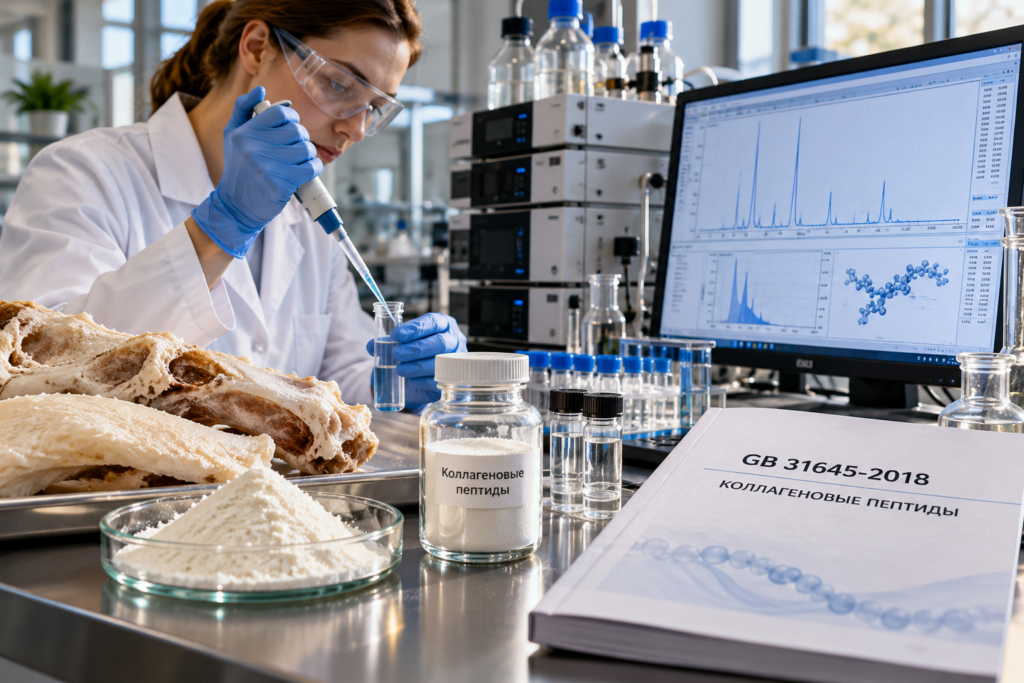
The third group is collagen peptides, used in two Shanlineng formulas, one based on flaxseed and the other on bone-derived collagen.
This ingredient has something many fashionable components lack: a dedicated mandatory national standard. GB 31645-2018, “Collagen Peptides,” took effect on 21 December 2018. Among other requirements, it defines eligible animal or fish materials that have passed veterinary inspection, prohibits certain hide-industry waste and chemically treated raw materials, specifies that at least 90% of the peptides must have a molecular mass below 10,000 daltons, sets a minimum hydroxyproline content of 3.0 g per 100 g, and places limits on lead, cadmium, arsenic, chromium and mercury. Enzymatic hydrolysis is the recommended production method, and compliance can be checked through laboratory analysis including chromatography.
In practical terms, a claim that collagen peptides are present in a product can be checked against the applicable standard and test report. Industry descriptions of JIMON products refer to enzymatic processing down to molecular masses of several hundred daltons. Until batch-specific analytical reports are available, that detail should be treated as a company or industry claim—not as an independently verified result. The standard itself is a documented reference against which such statements can be assessed.
Dihydroquercetin: an ingredient authorised under specific conditions
A fourth part of the range consists of botanical drinks. One example is a compound botanical drink in the Tianrancui line (添然萃) containing dihydroquercetin (二氢槲皮素, taxifolin), a flavonoid sourced from Dahurian larch roots (长白落叶松).
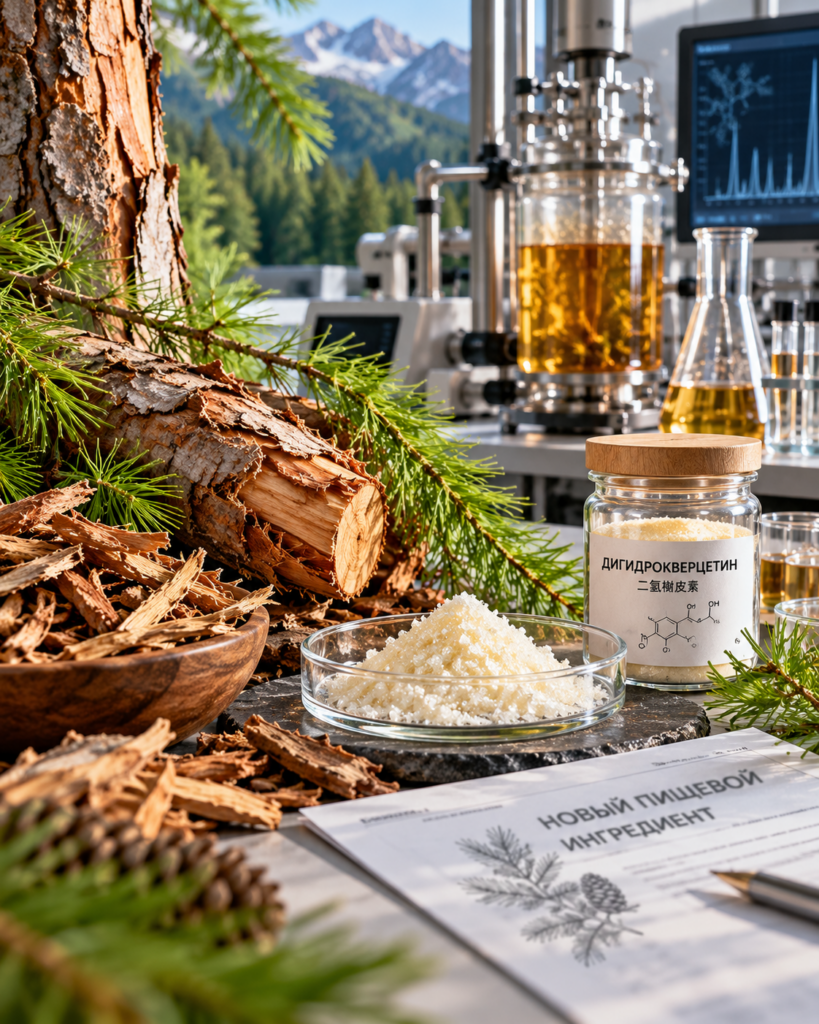
In China, this ingredient did not simply have an unrestricted historical food status. Under Announcement No. 5 of 2021, the National Health Commission approved dihydroquercetin as a new food ingredient with a specified raw-material source and multi-stage extraction and crystallisation process. The published conditions include a purity of at least 90%, a recommended intake of no more than 100 mg per day, a maximum level of 20 mg/L in beverages, and restrictions for certain groups, including children under 14 and people who are pregnant or breastfeeding. The official explanation also noted earlier authorisations for larch-derived dihydroquercetin as a new food ingredient in the European Union and as a food raw material or additive in Russia.
Document trace. The 2021 announcement establishes a regulated ingredient with specified limits and restrictions. It does not prove that a particular drink complies with the 20 mg/L limit; that requires an analysis of the actual product or batch, not merely the announcement for the ingredient.
Turmeric (姜黄), used in the Tianrancui “Gandanbeitai Jianghuang” drink described in the source material as a peptide-and-turmeric formula, provides a different example. Turmeric is included in the traditional dual-use substances catalogue, so its recognised food-and-medicinal-material status predates the modern functional-drink category.
Eight components in Bijunkang: a formula built from listed substances
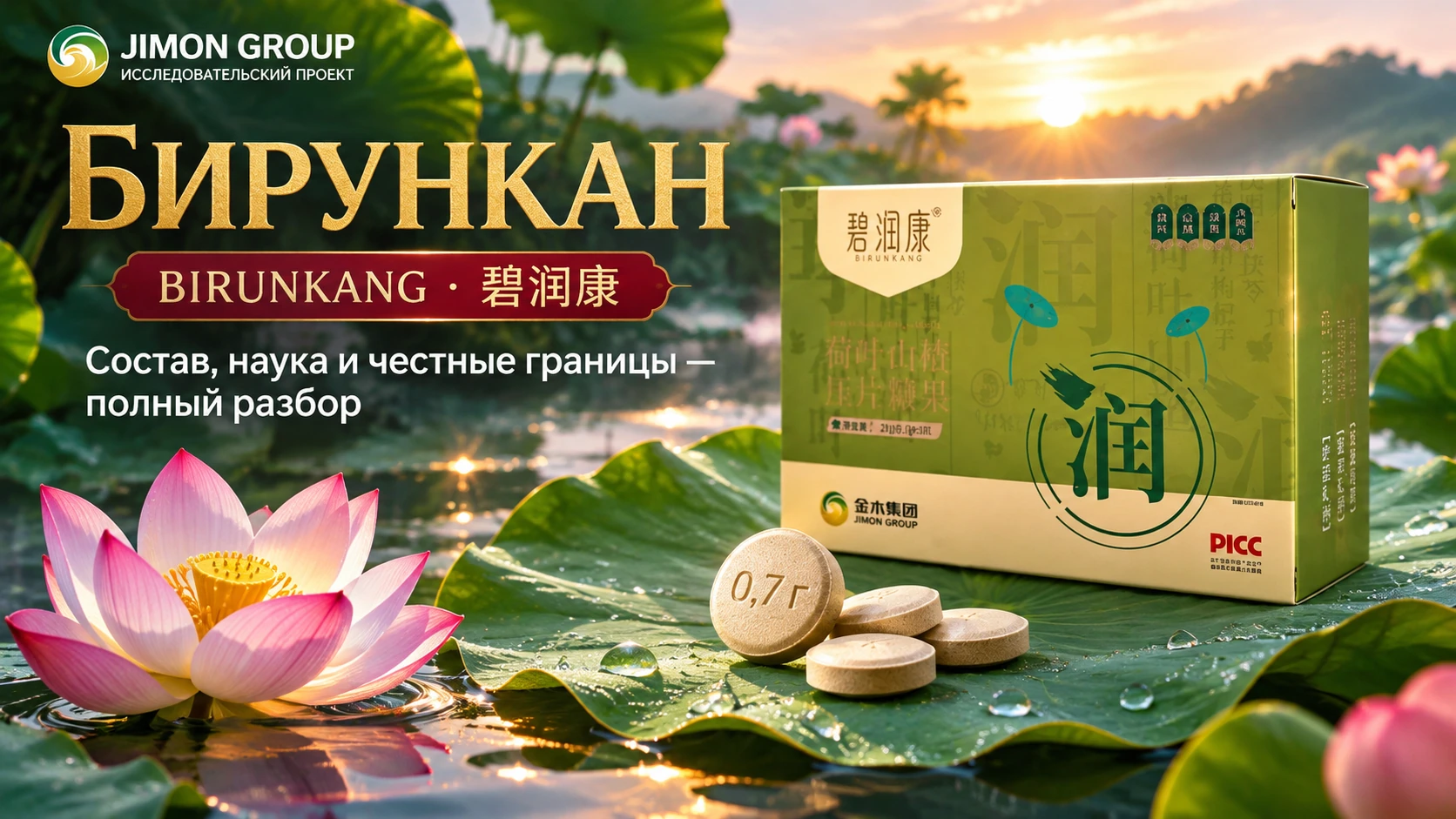
One of the clearest examples is the multi-ingredient product Bijunkang (碧润康). Product descriptions circulated by specialist websites and distributors list eight botanical components: lotus leaf (荷叶), hawthorn (山楂), poria (茯苓), radish seed (莱菔子), goji berry (枸杞子), coix seed (薏苡仁), cassia seed (决明子) and citron (香橼). I checked each one against the dual-use substances catalogue.
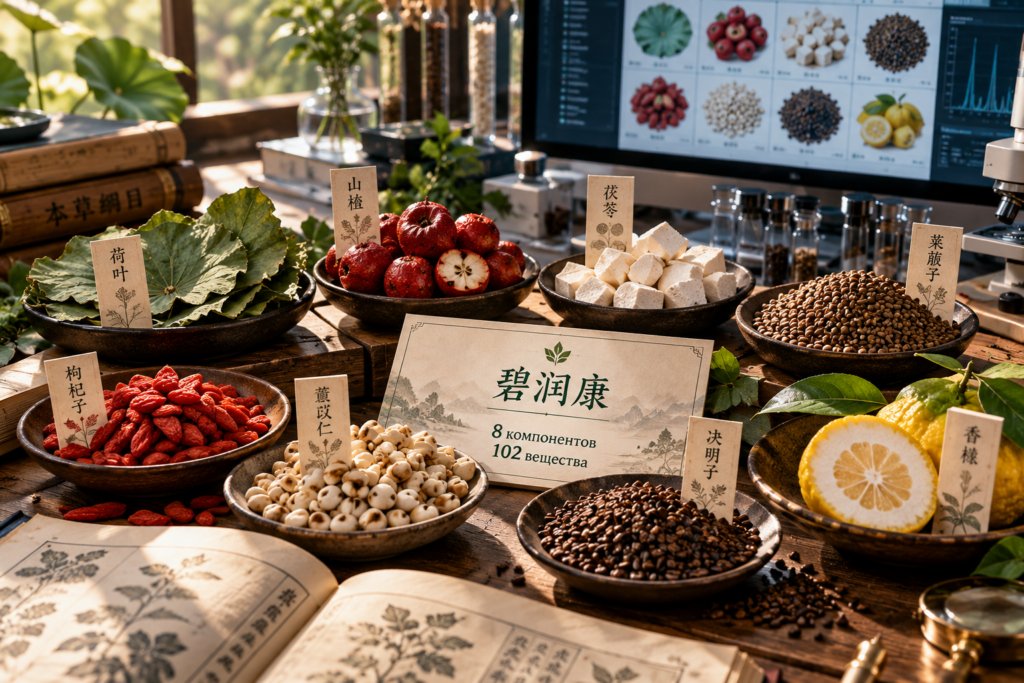
The finding is specific: all eight appear in the list discussed here. That means each has a recognised traditional food-and-medicinal-material status in China; it does not by itself validate every possible dose, formulation or marketing statement about the finished product.
There is also a research context for the way these ingredients are combined. A 2024 analysis in Food and Fermentation Industries examined registered health-food products containing cassia seed. The study reported that hawthorn and lotus leaf were among the most recurring companion ingredients and that product functions registered for these combinations often concerned lipid metabolism or intestinal transit, alongside traditional descriptions of the source materials.
This suggests that the “lotus + hawthorn + cassia” combination resembles a recurring industry pattern rather than a random list of plants. It does not prove the effectiveness of the specific JIMON product. I did not find publicly available clinical trials on Bijunkang itself, and I will not imply otherwise. What can be said is narrower: the reported formulation draws on ingredients with recognised regulatory status and resembles combinations observed in other registered products.
Where the raw materials come from—and why that matters
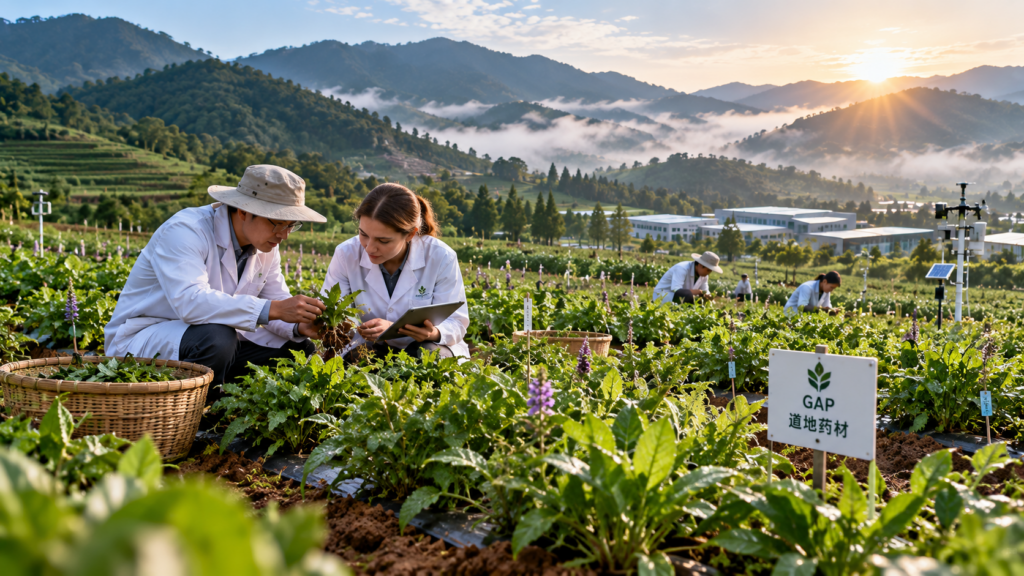
An ingredient’s story begins in the field, not in a jar. Company materials and industry reporting describe JIMON GROUP cultivation bases organised around the idea of geographically authentic medicinal materials (道地药材): sanqi in Yunnan, other crops in Inner Mongolia and Hainan, and a combined area of more than 10,000 mu of GAP-standard bases, according to the company website. This remains a company statement with partial support from industry coverage; I have not independently reconciled a complete list of cultivation sites and their legal status against public government records.
The group’s role in the raw-material supply chain has also been noted independently. In 2026, Jinmu was reported as joining a national alliance of leading medicinal-raw-material supply-chain enterprises alongside companies such as Yunnan Baiyao; the Hebei provincial health authority reported on the development. That supports the group’s participation in the sector, while the precise extent and legal status of each plantation still require item-by-item verification.
The transformation of raw materials into extracts and finished products—including GMP production, low-temperature extraction and quality control—is a separate subject from ingredient identity. This review focuses on the substances themselves and their regulatory status; the next layer is to follow each item through manufacturing, specifications and batch testing.
Where the evidence has limits
Three limits are part of the findings, not footnotes.
First: category status. Products in the direct-selling range include foods, health foods and cosmetics. They are not automatically medicines, and Chinese regulation restricts health-function claims to the permitted wording attached to a product’s registration. The reported function for lingzhi spore health-food products, for example, is “helps support immune function”—not a licence to claim that they treat disease. Past criticism of some distributors’ exaggerated promises illustrates why the legal category matters as much as the ingredient list.
Second: ingredient research is not the same as product research. Scientific literature exists on lingzhi, flaxseed, collagen peptides and traditional botanical materials. I did not locate publicly available clinical studies on the specific JIMON products discussed here. That is a limit on what can responsibly be concluded: evidence about an ingredient should not be converted into a guaranteed outcome for a finished formulation.
Third: registration numbers must be checked individually. Some health foods have registration records in SAMR systems, while cosmetics and medicines have relevant records in NMPA systems. The next step is to compare the exact number on each package with the official platform. I have not printed numbers that I could not verify through a primary lookup.
Open question. What does the complete registration map of the range look like, with each product’s number in the SAMR or NMPA database next to its ingredient list? Such a map would turn this article from a review into a searchable register. The public platforms make that task technically feasible, but it still requires product-by-product checking.
What the review establishes
Returning to the original question—what is inside?—the documentary answer is that the key ingredients discussed here have identifiable regulatory or standards-based status. Lingzhi was added to the dual-use catalogue under Announcement No. 9 of 2023. Dihydroquercetin was authorised as a new food ingredient under Announcement No. 5 of 2021 with specified quantitative limits and restrictions. Collagen peptides are covered by the mandatory GB 31645-2018 standard. All eight reported botanical components in Bijunkang appear in the dual-use catalogue, and the formula’s key combination resembles a recurring pattern in industry registration literature. The raw-material supply-chain role of the group has also been discussed in sector reporting.
The corresponding boundaries are equally clear: this is a food and health-food category, not medicine; scientific evidence about ingredients does not prove the effectiveness of the specific products; and several corporate figures or product-level details still require direct checks against primary records. Within that frame, the pattern is coherent: the product strategy described by the sources relies substantially on ingredients already defined in Chinese public lists, new-food-ingredient notices and national standards, rather than on substances with no clear regulatory identity.
This review addresses the origins and regulatory status of key ingredients, but it also points to the next task: a registration map for the entire range. If you have packaging showing product registration numbers, laboratory reports or source documents missing from this review, those records could help extend the map. The broader research space “Laboratory of Algorithms” examines how to read Chinese registries and distinguish an ingredient’s legal status from marketing claims.
Sources and primary records
- National Health Commission of China, Announcement No. 9 (2023): addition of lingzhi, tiepi shihu and other substances to the dual-use catalogue: official noticenhc.gov.cn.
- Public-health authority explanation of the dual-use list, traditional functions and rules of use: Yunnan Health Commissionynswsjkw.yn.gov.cn.
- Catalogue of 102 dual-use substances, including lotus leaf, hawthorn, poria, radish seed, goji, coix seed, cassia seed, citron, turmeric, polygonatum and Chinese yam: catalogue referencewfcms.org.
- National Health Commission Announcement No. 5 (2021) on dihydroquercetin as a new food ingredient, and conditions on source, purity, intake and beverage limits: CIRS reportcirs-group.com; announcement and explanationodk.com.cn.
- GB 31645-2018, “Collagen Peptides,” covering molecular mass, hydroxyproline, raw materials and production: standard overviewfoodtalks.cn; industry analysissohu.com.
- Xinhua, June 2025 expert consensus on flaxseed oil, alpha-linolenic acid, lignans and the hierarchy of evidence: Xinhua reportnews.cn.
- Food and Fermentation Industries (2024), analysis of registered products containing cassia seed and recurring combinations: journal articlesyfjxzz.com.
- Study of lingzhi spore wall-breaking methods and measured polysaccharides, triterpenes and ergosterol: research articlesciengine.com.
- CIRS analysis of health-food registrations in the first half of 2024, including wall-broken lingzhi-spore products and permitted function wording: CIRS analysiscirs-group.com.
- Consumer Daily, coverage of JIMON’s “big health” segment, licensed product categories and reported GAP cultivation bases: industry reportccn.com.cn.
- Coverage of the 89th China National Pharmaceutical Trade Fair and highlighted products: industry reportzhixiaotang.com.
- China’s direct-selling information system and reported licence date of 19 November 2015: report citing the systemsohu.com.
Editorial note: This is an independent, informational review, not an official publication of JIMON GROUP and not medical advice. Traditional-use descriptions, research on individual ingredients, company claims and evidence on finished products are distinct categories and should not be conflated.
Research keys
Browse the topic archives for this article.