1. On my desk — a box with an earthworm
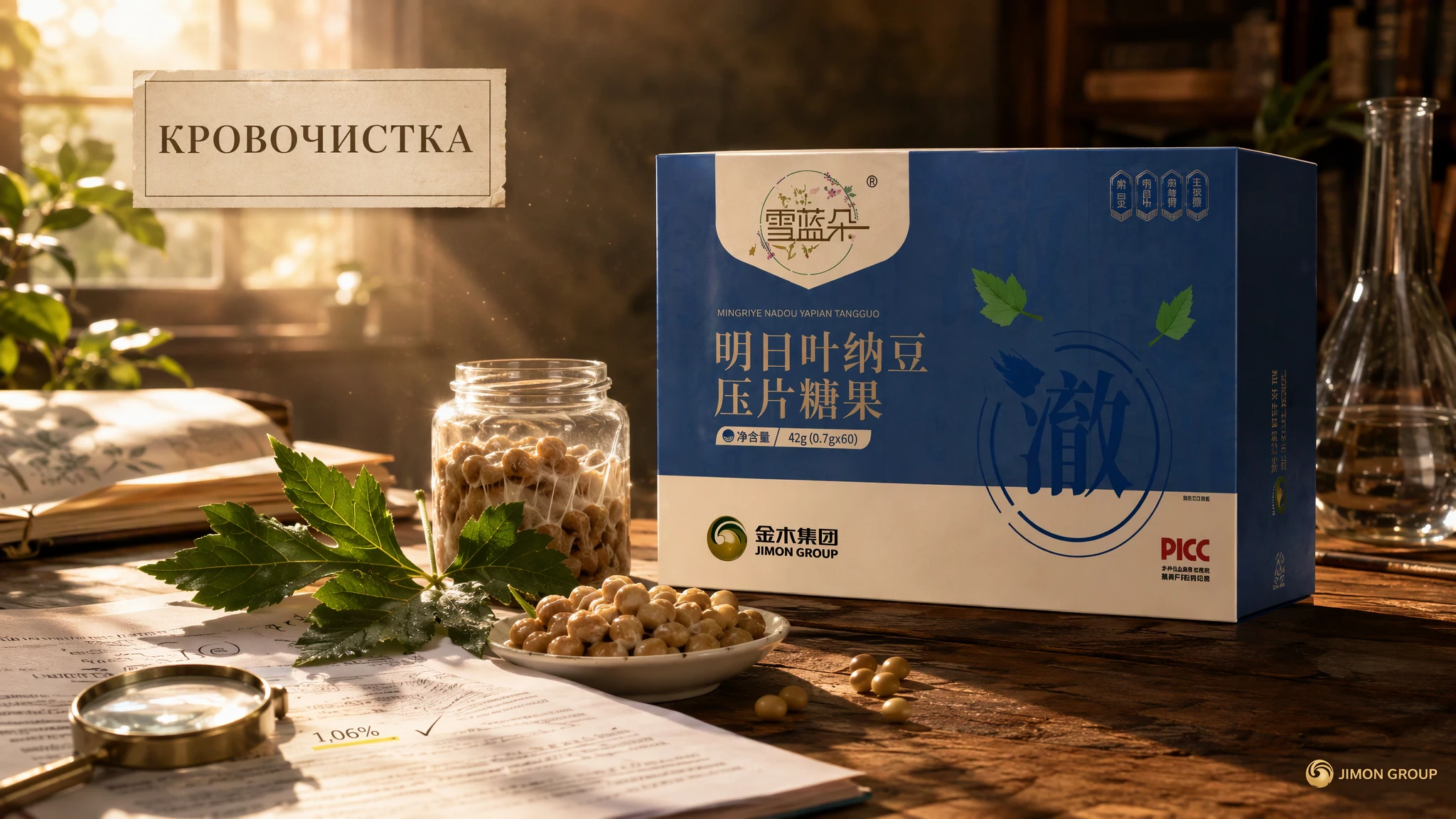
I usually start product analysis with the packaging. But here the packaging itself demands starting with the question: what do Japanese fermented beans, a weed from the Izu Islands, brown seaweed, and… an earthworm have in common? They are all listed on the product box XUE LAN DUO — in the original Chinese 明日叶纳豆压片糖果, brand 雪蓝朵 (Snow Blue®), manufacturer 金木集团 (JIMON GROUP) from the city of Anguo — the historical “medicine capital” of Hebei province. In Russian-speaking markets, the product is sold under the descriptive name “Blood Cleaner,” promising clean and elastic vessels.
The product is real, not phantom: I found its listings on major Chinese marketplaces — format 0.7 g × 60 tablets, price about 320 yuan product page on JD.comitem.m.jd.com. The manufacturing company was founded in 1993 and in October 2015 received a direct sales license from the Ministry of Commerce of the PRC profile in industry directorywap.zhixiaosj.com; meanwhile, critical publications about its multi-level sales model appeared in the Chinese press article in Zhixiao Baodao, 2020chndsnews.com — I note the distribution channel context without drawing conclusions about the product itself.
I have a 14-page Russian-language product presentation, and I decided to build this article not as a left-to-right composition retelling, but as a consequence: first — a trial of the advertising, then — a ladder of evidence by which the ingredients ascend from folklore to clinic. Because the main question for such a product is not “what’s inside,” but “what withstands verification.”
2. Trial of the advertising: six sworn theses of the presentation
The “Blood Cleaner” presentation is generous with scary numbers and beautiful verbs: “break down,” “block,” “activate,” “restore.” I took six key theses and checked each against primary sources. The result is in one table, and it is much more interesting than usual for such materials.
| Thesis from the presentation | Verdict | What the verification showed |
|---|---|---|
| “Only 1.06% of adult Chinese achieve ideal cardiovascular health” | Confirmed | The figure comes from a national study of 74,726 adults; other cohorts give even stricter numbers — 0.1–0.5% Nutrition, Metabolism & Cardiovascular Diseases, 2022nmcd-journal.com |
| “80% of deaths and disabilities are related to CVD” | Distorted | In China, CVD accounts for 44–47% of deaths, worldwide ~32%. The real WHO and World Heart Federation thesis is different: up to 80% of heart attacks and strokes are preventable by lifestyle WHF — CVD Preventionworld-heart-federation.org. The percentage “migrated” from prevention to mortality. |
| “Blood renewal capacity decreases from age 25” | Not confirmed | I did not find an exact source with such gradation in open scientific literature; aging of the hematopoietic system is a real process, but “25 years” looks like a marketing starting point. |
| “Studies show promise of combining ashitaba + natto” | Exaggerated | Both components have data separately (shown below); no joint synergy studies of ashitaba and natto were found in open databases. |
| Bibliography: “Sumi H. et al., J Nutr Sci Vitaminol, 2007 — RCT of nattokinase and blood pressure” | Reference mixed up | The RCT on blood pressure is Kim et al., 2008, Hypertension Research PubMedpubmed.ncbi.nlm.nih.gov; the famous Sumi work is from 1987, in Experientia, about the enzyme discovery PubMedpubmed.ncbi.nlm.nih.gov. |
| “Japan has the lowest CVD rates because they eat natto” | Oversimplification | Large cohorts do show an association of natto with lower CVD mortality, but Japanese health is the result of overall diet, medicine, and lifestyle; causality of a single product is not proven BMJ 2020;368:m34bmj.com. |
Two observations from this “trial.” The first — pleasant: the main statistical support of the presentation, 1.06%, turned out to be real, which is rare. The second — methodological: its most emotional moves (“80%” and “from 25 years”) follow the classic scheme where a truthful kernel is stretched into a fear formula. The preventability of 80% of cardiovascular events is, by the way, good news, and it concerns lifestyle, not a pill.

And one more framework I must fix before the science excursus — legal. The product category on the box is 压片糖果, “pressed candies”: under Chinese food law this is a regular food product, not a registered functional food 保健食品 (which carries the state “blue hat” mark). The law does not allow claims of therapeutic or preventive functions for this category — and, to the manufacturer’s credit, at the end of the presentation there is a disclaimer in Chinese: “all above is nutritional knowledge, provided for information only and is not a product function claim; the product cannot replace medicines.” The most honest place in the entire presentation. I will adhere to this framework further.
3. Battlefield: why the “clean vessels” market is so huge
To evaluate any “vascular” product, one must see the scale of the problem it profits from. Cardiovascular diseases are the number one cause of death on the planet: according to the current WHO fact sheet, in 2022 they claimed about 19.8 million lives — approximately 32% of all deaths worldwide, with 85% of these losses due to heart attacks and strokes WHO, Cardiovascular diseases — fact sheetwho.int. (The presentation cites WHO data from 2018 — 17.9 million; the numbers are outdated but the order is correct.)
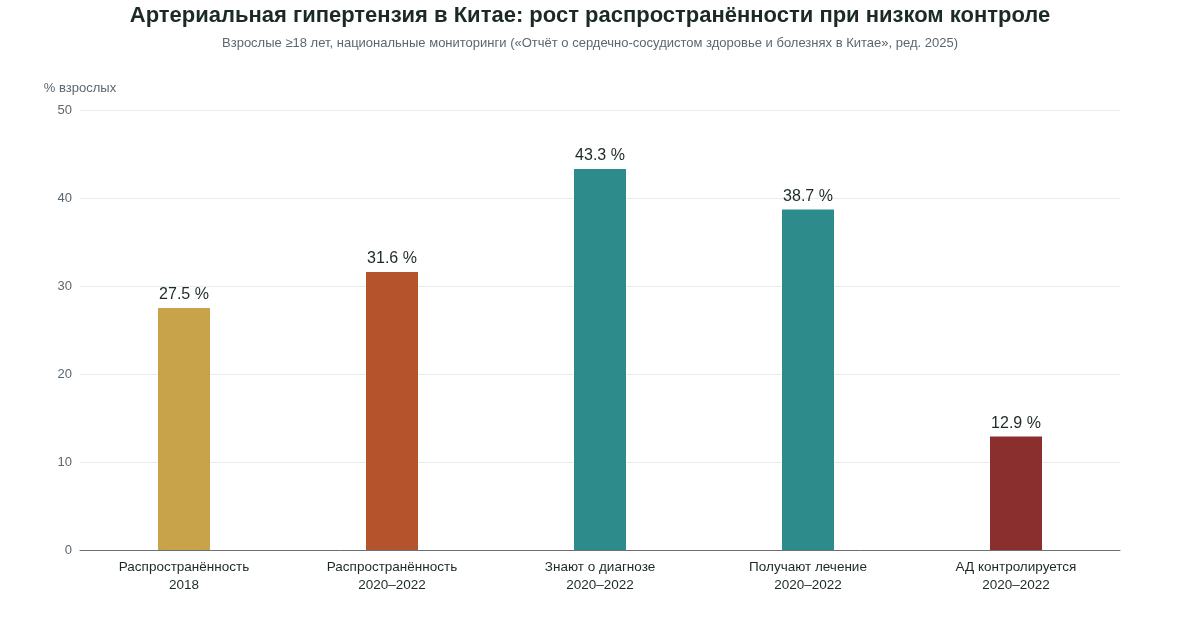
China — the product’s country of origin — shows an especially severe picture. According to the “Report on Cardiovascular Health and Diseases in China,” in 2019 CVD accounted for 46.74% of all deaths in rural areas and 44.26% in cities; the total number living with cardiovascular diagnoses was estimated at 330 million people, of whom 245 million had hypertension Report on Cardiovascular Health and Diseases in China 2021, PMCpmc.ncbi.nlm.nih.gov. The latest report edition shows an unhappy trend: hypertension prevalence among adults rose from 27.5% (2018) to 31.6% (2020–2022), and only 12.9% of hypertensives control their blood pressure Report 2025: Updated Summary, Biomedical and Environmental Sciencesbesjournal.com.
And that very honest figure from the presentation — 1.06% of adult Chinese with “ideal cardiovascular health” — is based on a large national study of 74,726 people by American Heart Association criteria Hu et al., NMCD, 2022nmcd-journal.com; other Chinese cohorts give even harsher estimates — from 0.1% to 0.5% Kailuan study, 91,698 participantspubmed.ncbi.nlm.nih.gov; review of estimates 0.2–1.06%pmc.ncbi.nlm.nih.gov. Almost no adult in the country lives “in the green zone” by all seven metrics simultaneously — blood pressure, cholesterol, sugar, weight, nutrition, exercise, and tobacco avoidance. This is the soil on which demand grows for any boxes promising results.
Now — the main part. I arranged the formula ingredients not in label order, but by steps of the evidence ladder: from what is tested on tens of thousands of people to what still lives in the test tube.
4. Step I. What is tested on humans: natto and its enzyme
4.1. First — the mystery of the “chickpea anomaly”
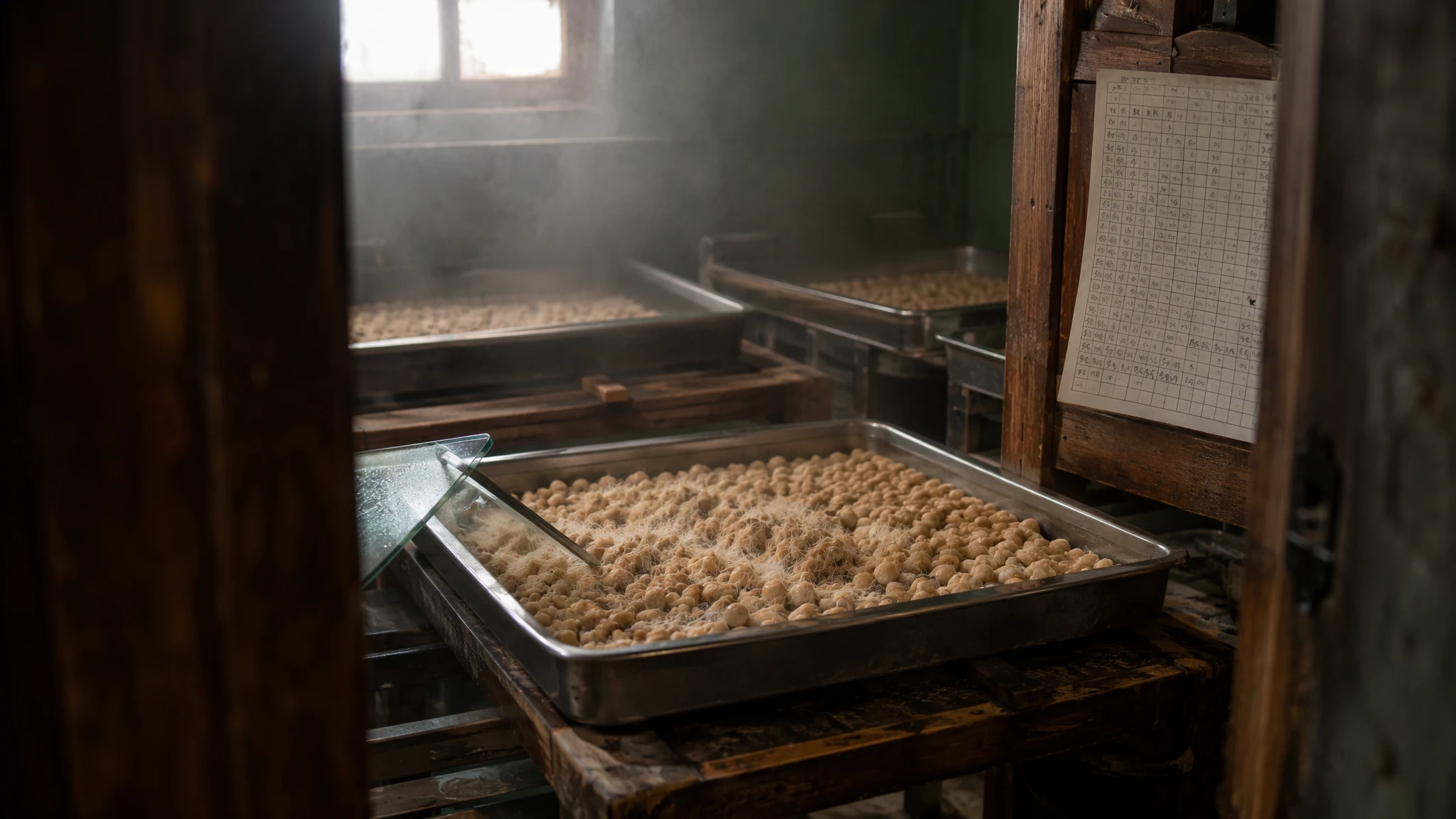
The presentation and box say something unexpected: 明日叶 & 鹰嘴豆纳豆 — “ashitaba and chickpea natto”. Not from soy, as in canonical Japanese tradition, but from chickpeas. My first impulse was to blame a translation error: the “soy” photo in the presentation actually shows characteristic “plush” chickpeas. But no — both the box and the final slide (“Tomorrow Leaf & Chickpea Natto”) are deliberate. And here the most interesting thing emerged.
Chickpea natto is not a marketing invention but the subject of serious laboratory work. In 2024, a group from Wageningen (Netherlands) published a study fermenting various legumes with three strains of Bacillus subtilis and measuring vitamin K2 in the MK-7 form, free amino acids, and nattokinase presence. The conclusion: chickpea is a full substrate for natto, and one chickpea natto sample had almost three times more vitamin K2 than the soy reference Development of novel natto using legumes produced in Europe, PMC, 2024pmc.ncbi.nlm.nih.gov. There are also Chinese studies on chickpea fermentation by natto bacillus volatile component analysis, Chinese Brewing Industry, 2021manu61.magtech.com.cn.
So the substrate choice is thoughtful: chickpea provides the same class of fermented metabolites, potentially high MK-7 levels, and is free from soy isoflavones and soy allergens. I note this as a formula plus — with the obligatory caveat: the amount of nattokinase (in FU units) and MK-7 in the product itself is nowhere indicated, and without numbers, dose discussion remains speculative.
4.2. Nattokinase: forty years from test tube to meta-analysis
The enzyme that started it all has a respectable pedigree. In 1987, Japanese researcher Hiroyuki Sumi described a new fibrinolytic enzyme nattokinase in the journal Experientia — a ~20 kDa protein that breaks down fibrin, the thrombus base Sumi et al., 1987, PubMedpubmed.ncbi.nlm.nih.gov. Since then, nattokinase has reached clinical trials — and here is what they showed, without embellishment.
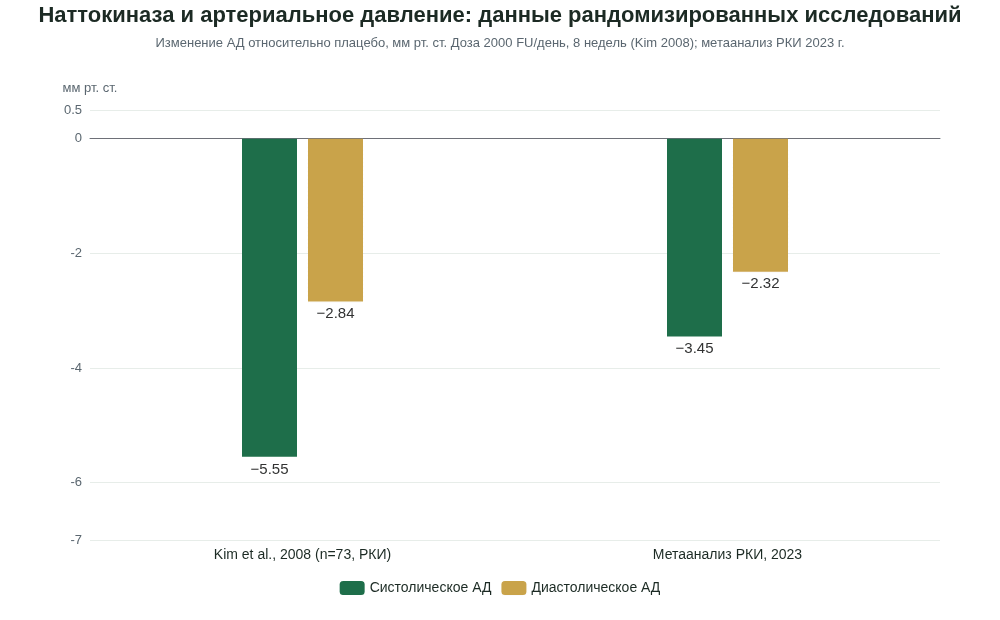
The most cited is the randomized double-blind placebo-controlled trial by Kim et al. (2008, Hypertension Research): 86 people with prehypertension or stage 1 hypertension took 2000 FU nattokinase daily or placebo for 8 weeks. Result: systolic pressure dropped by −5.55 mmHg, diastolic by −2.84 mmHg versus placebo, with parallel renin activity reduction Kim et al., 2008, PubMedpubmed.ncbi.nlm.nih.gov. This is confirmed by a 2023 systematic review and meta-analysis of RCTs: combined effect — −3.45 mmHg systolic and −2.32 mmHg diastolic pressure; lipid effects are ambiguous, and no significant coagulation factor changes were noted in healthy people Systematic Review and Meta-Analysis, PMCpmc.ncbi.nlm.nih.gov.
There is also pharmacodynamics on fibrinolysis: a single 2000 FU dose in healthy volunteers increased fibrinolysis and anticoagulation markers within physiological norms after a few hours, and course intake in small open studies reduced fibrinogen and factors VII and VIII clinical data review, Drugs.comdrugs.com; review: Nattokinase — a promising alternative in prevention of CVD, PMCpmc.ncbi.nlm.nih.gov.
My assessment of this step: blood pressure reduction by 3–5 mmHg is a real, statistically significant, but modest effect (first-line antihypertensives reduce pressure several times more). Nattokinase is not the “clot dissolver” from advertising but a food enzyme with mild measurable pressure effects and a promising but unproven role in fibrinolysis in large trials. An honest scientific profile — no fireworks.

4.3. Hundreds of thousands of Japanese: what cohorts see
The second evidence set is epidemiology. Japan is unique in that natto has been eaten for generations, allowing association checks on huge samples.
The Takayama study (29,079 participants, 16 years follow-up): the highest quartile of natto consumption versus the lowest was associated with reduced mortality from all cardiovascular causes (HR 0.75), stroke (HR 0.68), and ischemic stroke (HR 0.67). Notably, no such association was found for soy protein and isoflavones outside natto — the effect seems to be due to fermentation Nagata et al., AJCN / PubMedpubmed.ncbi.nlm.nih.gov.
JPHC study in BMJ (92,915 participants, ~15 years): high fermented soy product intake was associated with about 10% lower all-cause mortality, and natto specifically with lower CVD mortality in men (HR 0.76) and women (HR 0.79) BMJ 2020;368:m34bmj.com. A separate JPHC analysis on incidence (79,648 people) found an inverse association of fermented soy and natto with CVD risk in women (HR 0.80) PubMedpubmed.ncbi.nlm.nih.gov.
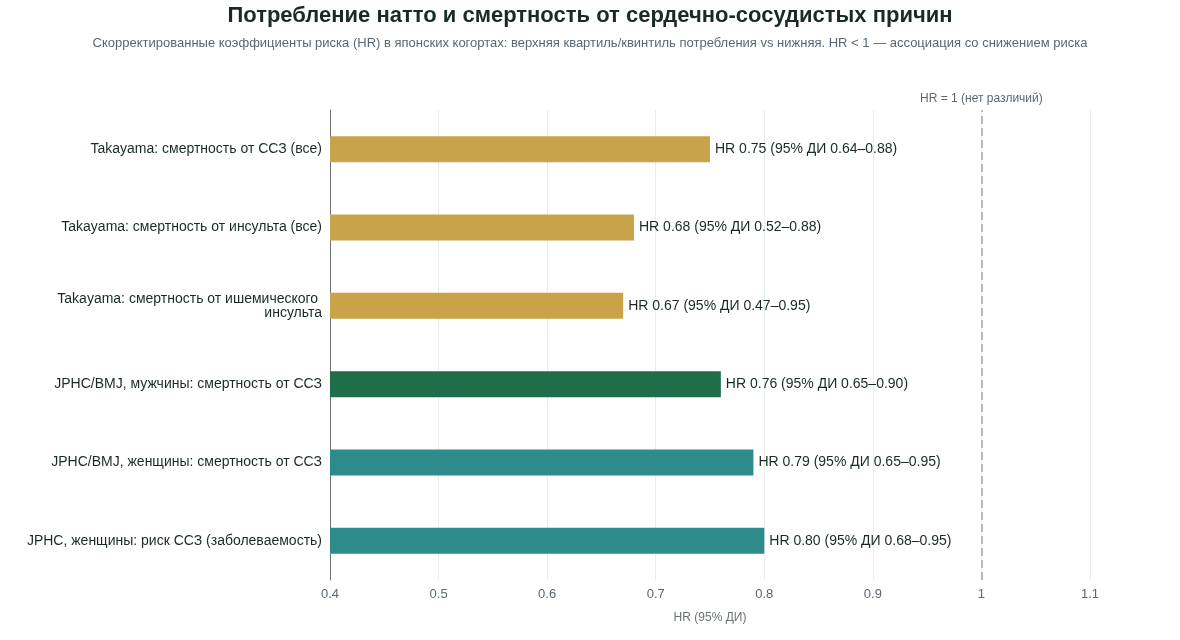
Two methodological stamps I must place next to this graph. First: these are observational cohorts — they show association, not causality; natto lovers may differ in overall lifestyle. Second, the biggest in the article: the data relate to natto as food with a whole ensemble of active substances (nattokinase, MK-7, polyamines, poly-γ-glutamic acid). Transferring these figures to a pressed tablet with unknown extract dose would be a “forbidden transfer,” the main error in product analytics. But as evidence that behind the tradition of natto there is more than folklore, these cohorts provide the best observational background possible for food products.
5. Step II. Laboratory strong, clinically young
5.1. Ashitaba: “tomorrow’s leaf” with precise chemistry
The second titular ingredient is ashitaba (Angelica keiskei), a plant from the Izu Islands of Japan, whose name translates beautifully: “tomorrow’s leaf” — according to legend, a cut shoot regrows by the next morning. Marketing calls it the “longevity plant” and mentions chalcones — and here, accidentally or not, it hits precise scientific terminology.
The main bioactive substances of ashitaba are two prenylated chalcones: 4-hydroxyderricin (4-HD) and xanthoangelol (XAG). Laboratory science about them is substantial: in cell models they suppressed fat cell maturation via AMPK and MAPK pathways Zhang et al., PubMedpubmed.ncbi.nlm.nih.gov; reduced macrophage inflammatory responses Journal of Agricultural and Food Chemistrypubs.acs.org; showed activity against melanoma in preclinical models via BRAF and PI3K targets Cancer Prevention Research / PubMedpubmed.ncbi.nlm.nih.gov; they are also attributed effects on platelet aggregation and vessel tone — so far mainly in vitro and in animals pharmacology review of Angelica keiskei, ScienceDirectsciencedirect.com. Safety is better studied than many plant components: no genotoxicity found, NOAEL in 90-day rat study is 300 mg/kg/day Food and Chemical Toxicology / EPA HEROhero.epa.gov.
Human data are limited but fresh. A 2012 pilot on people with metabolic syndrome (9 participants, 8 weeks) showed visceral fat and body mass reduction — though without a control group pilot Ohnogi et al., cited in reviewlidsen.com. And in 2024 a full randomized double-blind placebo-controlled trial was published: 42 overweight people (BMI 25–30) took ashitaba chalcone (16 mg/day) for 12 weeks, with statistically significant reductions in visceral fat area by CT and waist circumference versus placebo Watanabe et al., PubMedpubmed.ncbi.nlm.nih.gov. Caveats: the study was funded by the chalcone raw material manufacturer, the sample is small, and the focus is fat and metabolism, not “vessel cleanliness.”
5.2. Vitamin K2: mechanism against calcification and fresh JAMA
Vitamin K2 is separately declared on the packaging. The logic is clear: natto is the richest dietary source of menaquinone-7 (MK-7), and chickpea natto, as shown above, can accumulate even more than soy natto. The mechanistic idea is elegant: vitamin K is needed to activate matrix Gla protein (MGP), which inhibits vascular wall calcification.
The evidence base is observational but solid. The Rotterdam Study (4807 people): the highest tertile of menaquinone intake had lower risk of death from ischemic heart disease (OR 0.43), with no association found for vitamin K1 Geleijnse et al., Journal of Nutritionsciencedirect.com; a similar result came from the Prospect-EPIC cohort — every additional 10 mcg/day of K2 was associated with lower CHD risk review: Vitamin K2 — a neglected player in cardiovascular health, PMCpmc.ncbi.nlm.nih.gov. And in 2026 the first randomized trial with a “hard” imaging endpoint was published in JAMA Cardiology: two years of MK-7 supplementation (360 mcg/day) slowed coronary calcification progression in patients with existing CHD — although authors and journal editors emphasize that clinical significance remains to be determined VitaK-CAC trial, JAMA Cardiology, 2026cris.maastrichtuniversity.nl.
But K2 has a downside, and this is not optional but a mandatory warning: vitamin K directly antagonizes warfarin and other coumarin anticoagulants, and MK-7, due to its long half-life, can reduce INR even at doses of tens of micrograms per day NIH Office of Dietary Supplements — Vitamin K Fact Sheetods.od.nih.gov. For those for whom this is critical — see the safety section in detail.
6. Step III. Earthworm: the paradox of “medicine or food”
Now — the very ingredient I started the article with: earthworm protein. I won’t soften it: for Russian-speaking readers this sounds exotic. Meanwhile, it has the most paradoxical status in the entire formula. On one hand, it is officially allowed in China as a food ingredient: 地龙蛋白 is included in the list of “new food resources” by state announcement No. 18 of 2009 announcement text on the National Health Commission of PRC websitenhc.gov.cn. On the other — from the same raw material (地龙, “earth dragon” in Chinese medicine) lumbrokinase is isolated — a group of fibrinolytic enzymes studied as medicine.
The history of lumbrokinase began with the 1991 work of Mihara et al., who isolated the enzyme from Lumbricus rubellus; it was shown to directly degrade fibrin and activate endogenous plasminogen, and preclinical data indicate selective action in the presence of thrombus comprehensive review, Animal Models and Experimental Medicine, Wileyonlinelibrary.wiley.com. There is also clinical data: a multicenter randomized trial on secondary prevention of ischemic stroke (Chinese Medical Journal, 2013), and in 2025 a meta-analysis on acute ischemic stroke was published — cautiously concluding that lumbrokinase appears to improve neurological outcomes and thrombotic laboratory markers alongside standard therapy, but high heterogeneity and risk of bias prevent firm conclusions Dove Medical Press, 2025dovepress.com.
And here I draw the boldest line in the entire article. Lumbrokinase as an investigational medicinal enzyme is one thing; “earthworm protein” as a food ingredient in a tablet is quite another. The product presentation contains no enzyme activity, dosage, or bioavailability data for this form; clinical doses from stroke studies are incomparable to what physically fits in a 0.7 g tablet alongside a dozen other components. My verdict on the ingredient: “conceptually interesting, evidentially unknown” — the scientific idea is real, but whether it reaches the consumer in an effective dose is unanswered in open sources.

7. Step IV. Supporting composition: second fiddle, but not redundant
The other components are an ensemble of “second fiddles” with varying evidence depth.
Fucoidan — a sulfated polysaccharide from brown seaweed, positioned in the presentation as a “marine prebiotic.” Human data are modest but emerging: a 2024 double-blind RCT with fucoidan from Saccharina latissima showed microbiota fermentation producing short-chain fatty acids and good tolerance PMCpmc.ncbi.nlm.nih.gov; an RCT in 70 Chinese prediabetic patients (1000 mg/day, 12 weeks) noted reductions in pro-inflammatory markers TNF-α, IL-6, and LPS PubMedpubmed.ncbi.nlm.nih.gov. A fresh 2025 systematic review of clinical data is sober: only five human studies, effects “moderate, inconsistent,” safety good, conclusions premature PubMedpubmed.ncbi.nlm.nih.gov.
Inulin — a classic prebiotic from chicory root. A large systematic review of inulin-type fructans confirms its main reliable property: stable bifidobacteria growth and improved gut markers; effects on lipids are inconsistent, on blood pressure absent Hughes et al., PMCpmc.ncbi.nlm.nih.gov. So inulin works on the “gut” part of the promises, not on vessels.
Cassia seeds (决明子, juemingzi) — a familiar Chinese pharmacopeia herb: official action “clears liver heat and improves vision, moistens intestines.” Their anthraquinone glycosides lowered blood lipids in hyperlipidemic rats and mice via PPARα/SREBP-1c pathways and microbiota review: Chinese Herbal Medicine on Dyslipidemia, PMCpmc.ncbi.nlm.nih.gov; Cassiae semen extract, Frontiers in Pharmacology, 2025frontiersin.org. Human RCTs of the monocomponent are practically absent, and the same review warns: cassia anthraquinones require caution with long-term high-dose use due to potential toxicity.
Corn silk — a traditional mild diuretic component. There is even a small randomized human study: aqueous extract at high doses (equivalent to ~10–21 g dry silk) lowered blood pressure for several hours after a single dose in 40 adults PubMed, 2015pubmed.ncbi.nlm.nih.gov; pharmacology review confirms a diuretic, potassium-dependent mechanism and lack of clinical data Corn Silk in Healthcare, PMCpmc.ncbi.nlm.nih.gov.
Almond flour and tomato powder — rather a food base: plant protein and beneficial fats from almonds, lycopene from tomatoes with antioxidant reputation. Normal food ingredients, but no independent “vascular” story at tablet dose.
Overall impression of the ensemble: it is assembled competently — almost every component has a mechanistic logic turn (fibrinolysis, prebiotics, lipid metabolism, mild diuresis), distinguishing the formula from random “everything thrown in” blends. But a clinical trial of the product itself — the only evidence type able to turn a set of interesting ingredients into a proven complex — is not publicly available.
8. Red zone: who should not take this product
Regardless of sympathy for the formula, there are contraindications I must fully and uncompromisingly state.
People on anticoagulants and antiplatelets — the main risk group. First, vitamin K2 (MK-7) weakens warfarin and other coumarins NIH ODSods.od.nih.gov. Second, nattokinase itself has fibrinolytic activity, and Memorial Sloan Kettering warns: theoretically it may increase bleeding risk combined with anticoagulants, antiplatelets, and fibrinolytics; a case of intracerebral hemorrhage with aspirin combination is described; raw natto is rich in vitamin K and reduces warfarin effect MSKCC — Nattokinasemskcc.org. Added to this is earthworm protein with its fibrinolytic reputation. For anyone taking warfarin, apixaban, aspirin, or clopidogrel, any “vascular” product with such a formula is only after consulting a doctor. Period.
Pregnancy, lactation, children. No reliable safety data on nattokinase and ashitaba chalcones for these groups WebMD — Nattokinasewebmd.com.
Legume allergy. Chickpea natto is still a fermented legume product; people allergic to chickpeas and related crops should be cautious.
Long-term high-dose cassia use. Cassia seed anthraquinones are marked in reviews as requiring caution with chronic use PMCpmc.ncbi.nlm.nih.gov.
And the main framework, established already in the “trial of the advertising”: this is a regular food product, not medicine and not a registered dietary supplement. It does not treat hypertension, does not “dissolve” atherosclerotic plaques, and does not replace any cardiologist’s prescription.
9. What I took from this investigation
I will summarize in three lines and three caveats.
Three plus lines. First: the formula is noticeably better thought out than average on the market — chickpea natto turned out not a crooked Japan knockoff but a meaningful substrate with a studied MK-7 profile. Second: key components have real science — nattokinase RCTs with honest moderate pressure numbers, ashitaba chalcones with studied molecular history and first human RCT, natto as food with cohorts of tens of thousands, K2 with a fresh JAMA Cardiology trial. Third: even the exotic earthworm protein stands on a legal food status and respected pharmacological tradition of lumbrokinase.
Three caveats that do not cancel but honestly limit. First: doses are unknown — neither nattokinase FU, nor milligrams of chalcones, nor enzyme activity of the worm per tablet; without this the formula is unverifiable. Second: there is no clinical study of the product itself — the entire base is collected from separate ingredients and, in places, other medicinal forms. Third: the “regular food” category itself sets a ceiling on expectations — this is food with interesting functional logic, not therapy.
Open research question. In open sources available to me, I could not find a full product label with quantitative composition per tablet (nattokinase activity in FU, ashitaba chalcone content, MK-7 and earthworm enzyme levels), nor the food production license number (SC). If you have a photo of the back of the packaging or the certificate itself — share it with me, I will update the analysis.
10. Two doors
If you read product analyses not for enthusiasm but for verification — if it is important for you that every number leads to PubMed, not a promotional booklet — I speak your language.
Contact the author — for questions about products, composition verification, and marketing claims.
Algorithm Laboratory — a channel where I analyze dietary supplements and functional products using the scientific method.
Medical disclaimer. The material is informational, not medical advice, diagnosis, or prescription and does not replace a doctor’s consultation. The described studies relate to individual components and are not proof of the finished product’s properties. Before using any products for cardiovascular diseases, while taking anticoagulants, antiplatelets, antihypertensives, during pregnancy and lactation, consult a doctor.
Research keys
Browse the topic archives for this article.