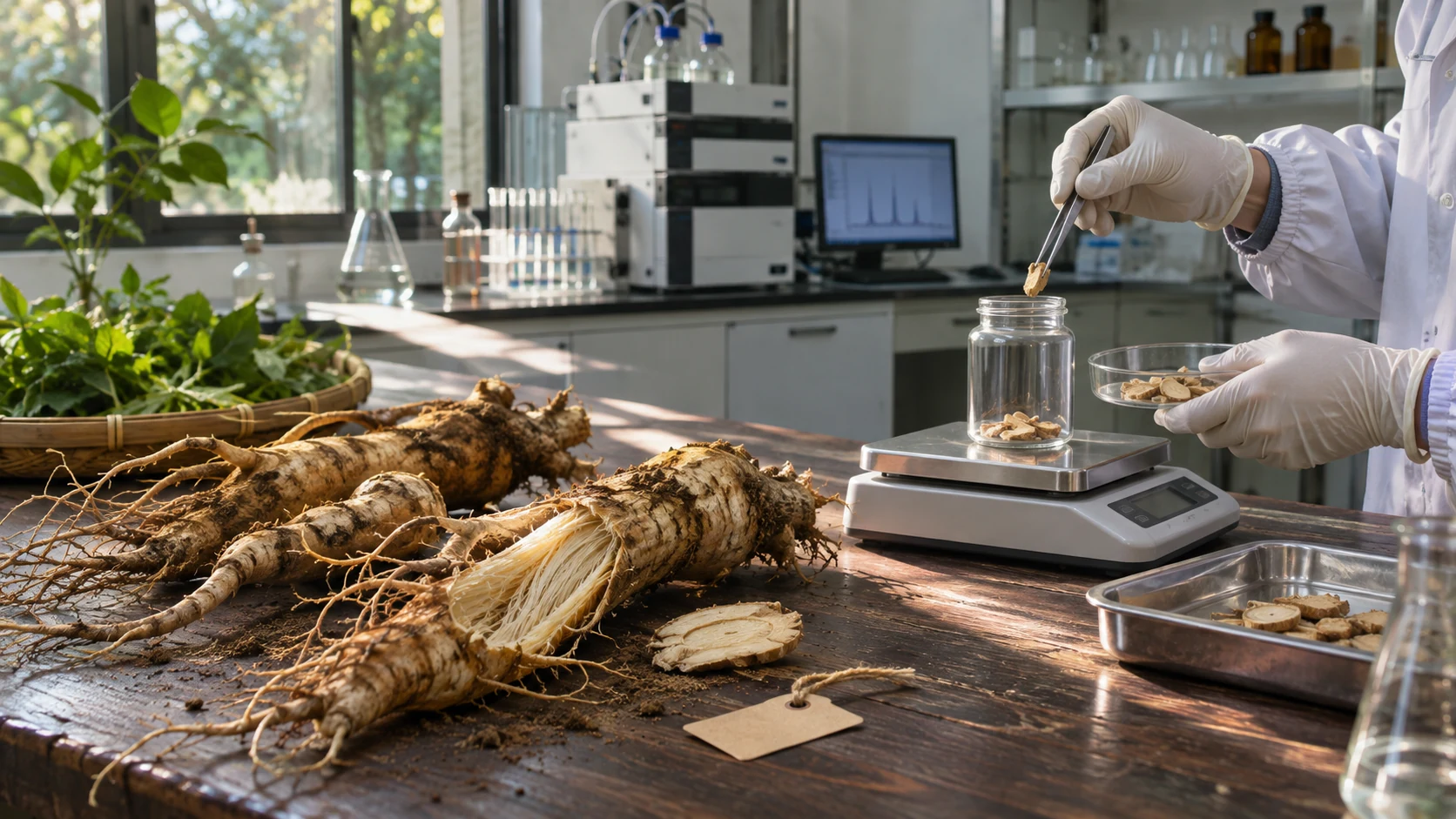
In October 2026, JIMON GROUP received the second prize at the innovation competition in Hebei Province. Behind the official announcement of the victory lies a much more interesting story: a research project that began back in 2024 and attempts to solve one of the fundamental problems of modern phytopharmacy — how to achieve stable quality of medicinal raw materials created by nature itself.
Imagine two roots of the same medicinal plant.
They belong to the same botanical species. They look almost identical. They were collected in the same province and sent for processing.
But if you place the samples in a laboratory and analyze their chemical composition, the results may differ.
One root grew in a well-lit area, the other in the shade. The soils differed in composition. The plants received different amounts of moisture. Perhaps they were harvested at different stages of development.
And it is from such raw materials that extracts, medicinal products, and other products are subsequently made.
How to ensure reproducible quality if the starting material is constantly changing?
This question became the starting point of my investigation into the news about JIMON GROUP.
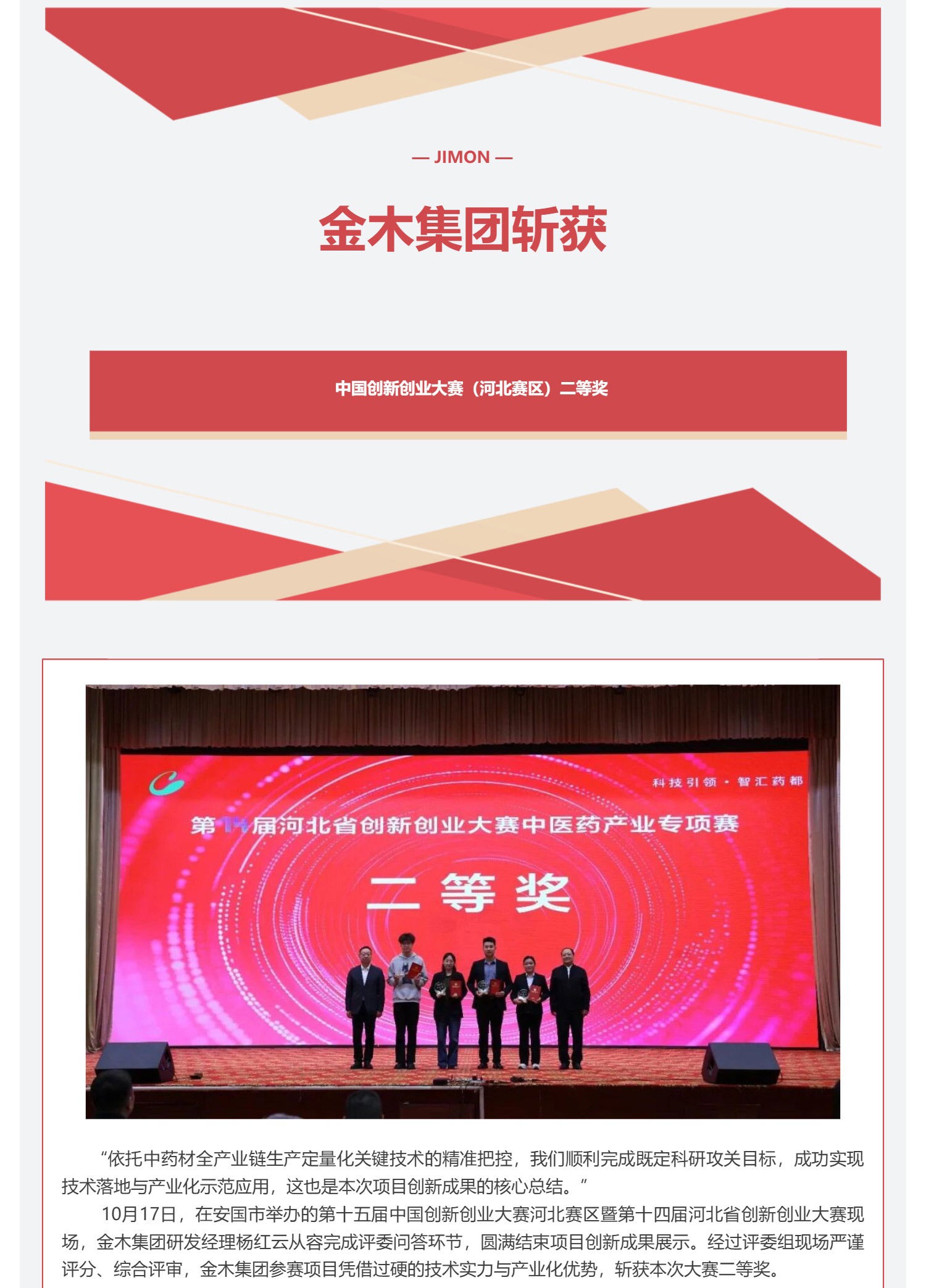
On October 17, 2026, the company presented a technological project in the Chinese city of Anguo dedicated to quantitative control of the entire production chain of medicinal plant raw materials.
Based on the competition results, the project received the second prize.
But I wanted to find out not only what award the company received.
It was much more interesting to understand exactly what the researchers developed, how far the work had progressed, and whether there was independent evidence of its results.
And here documents were found that allow a much deeper look than the usual competition announcement.
An award behind which lies an entire production system
On October 17–18 in Anguo, Hebei Province, the final of a special innovation competition in the field of traditional Chinese medicine took place.
The event was part of the XV China Innovation and Entrepreneurship Competition — within its regional stage in Hebei — and the XIV Innovation and Entrepreneurship Competition of the province.
The organizer was the Hebei Provincial Science and Technology Department.
According to the Chinese state media resource CNR on October 20, in the special industry category, two first prizes, four second prizes, six third prizes, and ten encouragement awards were given. Sourcem.sohu.com
Among the holders of the second prize was named 金木集团有限公司 — Jinmu Group Co., Ltd., known internationally as JIMON GROUP.
Thus, the fact of the award is independently confirmed from the company.
However, this was an award of a regional industry competition, not second place in the all-China final. For a proper understanding of the event’s scale, this distinction is significant.
Now — to the project itself.
Its Chinese name:
冀产中药材全产业链生产定量化关键技术集成与产业化示范
Translated — “Integration of key technologies for quantitative control of the production of medicinal plant raw materials in Hebei Province throughout the entire production chain and demonstration of their industrial application.”
The wording is quite complex.
But behind it lies a clear and extremely important scientific and production task.
Not just to grow a medicinal plant.
Not just to determine the chemical composition of the finished extract.
But to build a controlled system in which quality can be monitored at different stages — from raw material cultivation to processing and finished products.
It was this idea that made me continue the search.
The first unexpected document: the research began back in 2024
It turned out that the project’s history is much older than the October award.
In the official list of scientific projects of the Chengde Medical Institute, updated in June 2026, there is a work with exactly the same title. Sourcezy.cdmc.edu.cn
The document indicates the implementation period — 2024–2026 — and the funding source as the Hebei Provincial Science and Technology Department.
This is an important independent confirmation.
We are dealing not just with a presentation prepared specifically for the competition, but with a real research project, information about which was published by an educational organization.
But an even more interesting material appeared a year earlier.
On May 26, 2025, the Chinese publication Great Wall Network published a report on a new model of cooperation between scientific institutes and production enterprises in Hebei Province. Sourcebd.hebccw.cn
It mentions the same JIMON GROUP project.
Moreover, it provides details that are almost absent in the October award announcement.
According to the report, the work began in June 2024.
It was coordinated by the Hebei Institute of Industrial Technology for Medicinal Plant Raw Materials, associated with JIMON GROUP, together with scientific partners.
Researchers were engaged in digitization, quantitative evaluation, and standardization of raw material production.
Special attention was paid to such crops as yam and chicory.
And here arises the question: why does the research program deal not with a single formula but with the entire production chain?
To answer, it is necessary to look into the plant itself.
There are no two absolutely identical chemical laboratories in nature
A medicinal plant is a complex biochemical system.
It does not just absorb substances from the soil. Inside its cells, continuous reactions occur, resulting in the formation of a wide variety of compounds: polysaccharides, phenolic substances, organic acids, terpenoids, and many other molecules.
Their composition and concentrations depend on the plant species, growing conditions, development stage, harvest time, and subsequent processing.
Hence arises one of the central problems of industrial use of plant raw materials.
The same mass of plant material does not guarantee the same chemical composition.
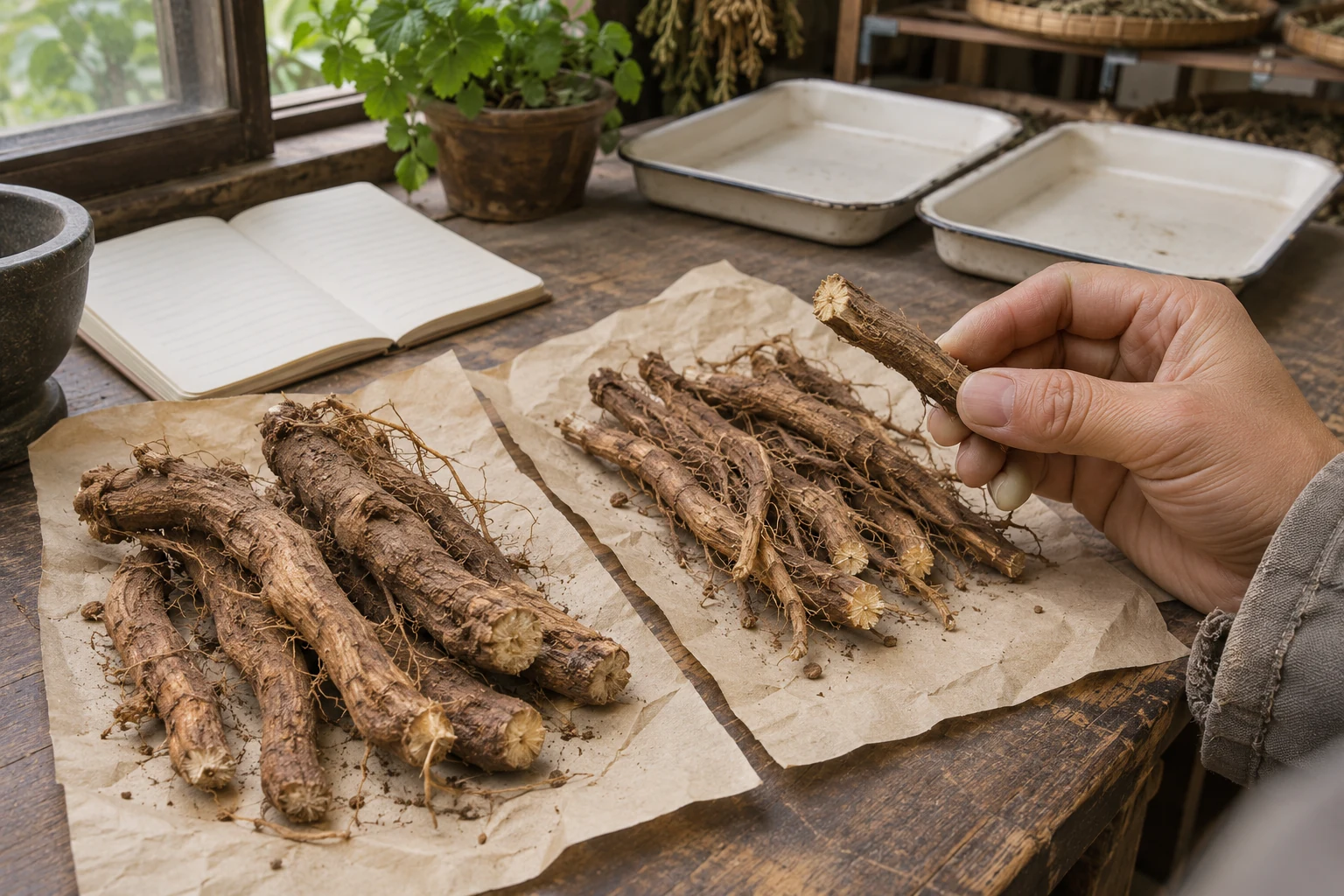
A kilogram from one harvest may differ from a kilogram from another.
Therefore, modern pharmaceutical technology strives to control not only the quantity of raw materials but also the characteristics that truly matter for quality and safety.
Depending on the specific plant species and regulatory requirements, its botanical authenticity, moisture, content of certain chemical compounds, microbiological indicators, pesticide residues, and heavy metals may be assessed.
Some parameters can be analyzed by analytical methods — for example, chromatography and mass spectrometry.
But laboratory analysis of the finished sample solves only part of the task.
Because by the time the raw material arrives at the laboratory, many factors that determined its properties are already in the past.
This is where the importance of controlling the entire production chain arises.
From plantation to laboratory: what quantitative management means
Suppose the enterprise grows a medicinal plant on several plots.
Ordinary production documentation can record where and when the harvest was collected.
But for deeper quality management, much more must be taken into account.
The origin of seeds or planting material. Soil characteristics. Growing conditions. Applied agricultural technologies. Harvest times. Drying regimes. Storage conditions.
Then — laboratory research results.
Together, this data can help trace which conditions are associated with changes in raw material characteristics, as well as identify deviations between batches.
This approach corresponds to the direction designated in Chinese scientific and production materials by the term 全产业链定量化 — quantitative management of the entire production chain.
It is important to understand: this describes a technological principle, not a claim that JIMON GROUP has already implemented every listed measurement method within the awarded project. Detailed technical documentation for all its components has not yet been published in sources available to me.
However, there is independent information about some directions of the research group’s work.
In May 2025, Great Wall Network reported on the application of digital and standardized technologies for cultivation and research of medicinal raw materials, including the use of 5G communication technologies in management and traceability systems.
Such a system can connect data on cultivation, quality checks, processing, and subsequent production.
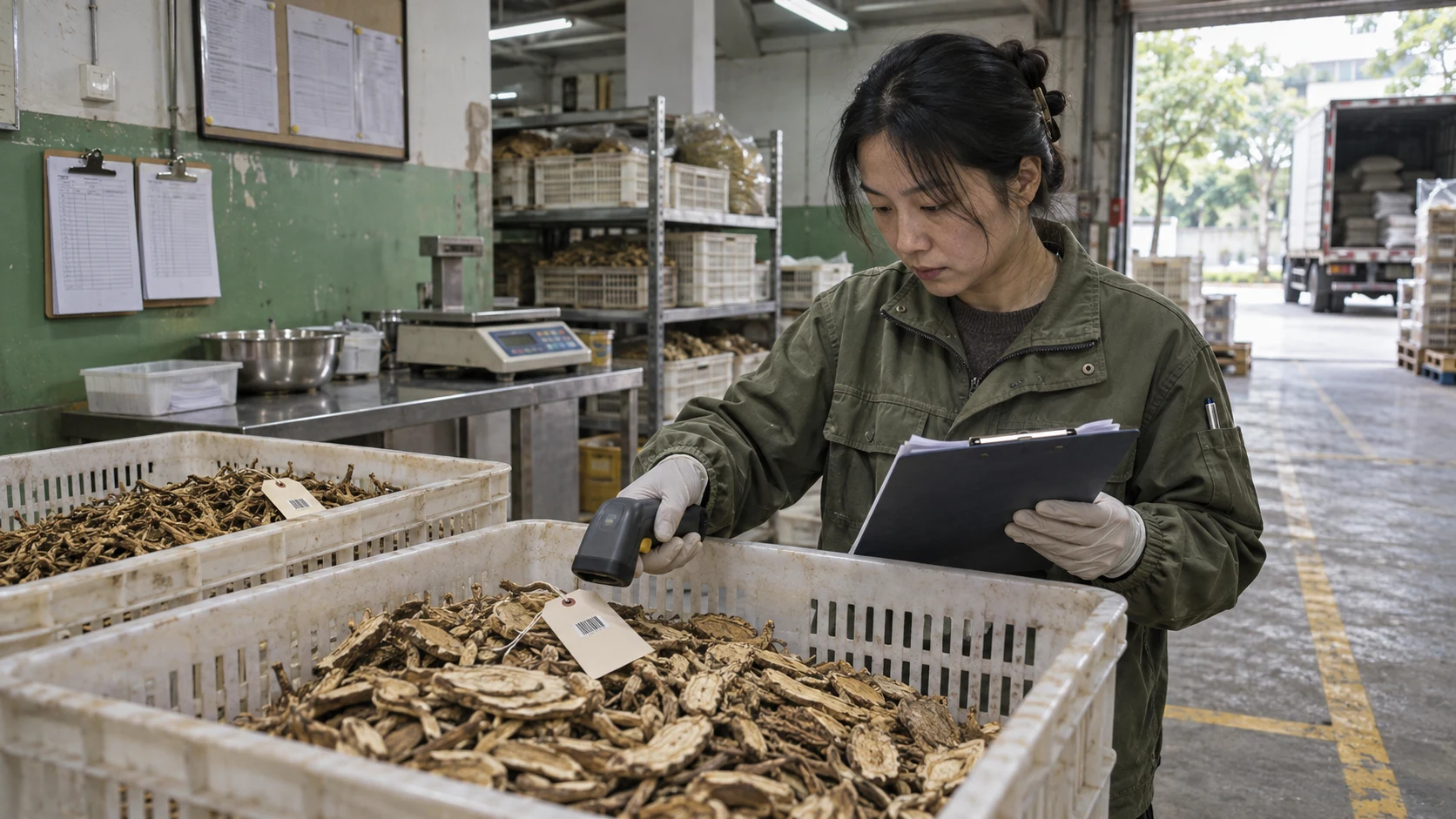
And here the scientific task acquires an industrial scale.
Instead of fragmented information about batches of raw materials, the enterprise seeks to obtain a connected picture of their origin and further movement.
It is not just about establishing that the product has passed control.
But having the ability to find out where the raw materials came from, what conditions they were subjected to, and at which stages their characteristics were formed.
Yam, chicory, and two results that were discovered
Perhaps the most interesting detail was found in that very independent report dated May 26, 2025.
The head of the Hebei Institute of Industrial Technology for Medicinal Plant Raw Materials, Li Hong, told a journalist that within the framework of a joint research program, work was carried out with yam and chicory.
Yam is a plant of the genus Dioscorea, some species of which are used in food and traditional medical practice.
Chicory is a plant of the genus Cichorium, known for its use in the food industry and research on its biologically active substances.
The program considered the possibility of creating various product categories, including food and pharmaceutical developments.
And here is a specific result.
By May 2025, according to the institute head’s statement, two new products had been developed, one of which had already been brought to industrial implementation.
This is significantly more interesting than the abstract formulation “the company is implementing innovations.”
A verifiable sequence emerges: raw material research, technology development, product creation, transition to industrial application.
However, accuracy must be maintained here.
The found publication does not specify the trade names of these two products, their full compositions, or registration categories. Clinical data on efficacy are also not presented.
Therefore, it is not yet possible to automatically link them to any specific JIMON GROUP products listed in international catalogs.
But the very fact of the existence of such a report in an independent regional publication helps to understand why the competition jury might have been interested not only in theory but also in the industrial prospects of the development.
Second finding: the scientific partner confirmed the existence of the project
Let us return to the Chengde Medical Institute.
In its official list of research works, the project is listed among programs carried out with funding from the provincial scientific authority.
And the Great Wall Network report includes a comment from Zhao Chunying — head of the Institute of Chinese Pharmacology at Chengde Medical Institute and one of the provincial sector research units.
She explained that the joint work focused on cultivation, harvesting, processing, and quality control of medicinal plants.
In her assessment, by May 2025, program participants had largely achieved the tasks of quantitative management of the entire production chain and industrial demonstration.
Of course, the expert assessment of a project participant is not equivalent to an independent technical examination of all results.
But it allows confirming two facts.
First — JIMON GROUP’s cooperation with scientific institutions has a documented history.
Second — the subject of research was indeed a comprehensive system for producing medicinal raw materials, not a separate laboratory experiment.
And now it becomes clearer what exactly was presented in October 2026.
Seven minutes for questions, two years for research
According to JIMON GROUP, the competition presentation was prepared by a team led by research department manager Yang Hongyun.
On October 17, she presented the work before the expert commission.
The competition format provided for an eight-minute presentation and a seven-minute question and answer session.
The company reports that the performance was prepared to the second: the demonstration part lasted 7 minutes 45 seconds.
During this time, it was necessary to explain the multi-year project, show its technological novelty, results, and possibilities for industrial application.
As a result of the evaluation, the company received the second prize in the special competition category.
Importantly, the award confirms the result of the competition expertise but does not replace published scientific protocols, industrial validation, or safety data of specific products.
But now we have a much more substantive picture of the event.
2024 — project start.
2025 — reports of the first developed products and industrial implementation of one of them.
2026 — official presence of the project in the scientific list of Chengde Medical Institute and its award at the industry competition.
Thus, the October news turns from a brief announcement of the prize into a documented history of technological development.
Why this work is important not only for JIMON GROUP
In March 2022, updated Good Agricultural Practice (GAP) rules for the production of medicinal plant raw materials were introduced in China. Sourceforestry.gov.cn
The document includes 14 chapters and 144 articles.
It covers site selection, planting material, cultivation, harvesting, primary processing, quality management, and traceability.
And in the 2025 Chinese Pharmacopoeia, requirements for authenticity determination of raw materials, chemical composition control, residual contamination, and other indicators were further developed. Sourcem.cnpharm.com
That is, the industry is gradually moving toward a system where traditional knowledge must be accompanied by measurable characteristics.
In this context, JIMON GROUP’s scientific direction is part of a much broader technological transformation.
Historically, Chinese pharmacology has accumulated vast experience in the use of plants.
However, industrial production poses additional questions.
Is it possible to obtain comparable raw material quality in different seasons?
Which cultivation conditions most strongly affect the chemical profile?
Can the origin of a specific batch be traced?
How to ensure that technological processing has not altered important material characteristics?
And finally, how reproducible will the results be if the developed technology is transferred to another enterprise?
Answers require experiments, analytical measurements, standards, and data accumulation.
That is why production chain research deserves attention no less than discoveries of individual biologically active substances.
Because even an interesting formula loses industrial value if its composition and quality cannot be consistently reproduced.
What else remains to be proven
After studying the competition and scientific materials, I still have questions.
Which exact quantitative indicators formed the basis of the developed system?
For which medicinal plants was the stability of results between harvests confirmed?
What analytical methods were used and did they undergo independent validation?
How much does the technology reduce differences between production batches?
And is it possible to obtain published results of industrial demonstration with specific numerical indicators?
These details have not yet been recovered from open sources.
But it is important here to distinguish two different concepts.
Proof of stable composition and quality of raw materials is not the same as proof of therapeutic efficacy of the finished product.
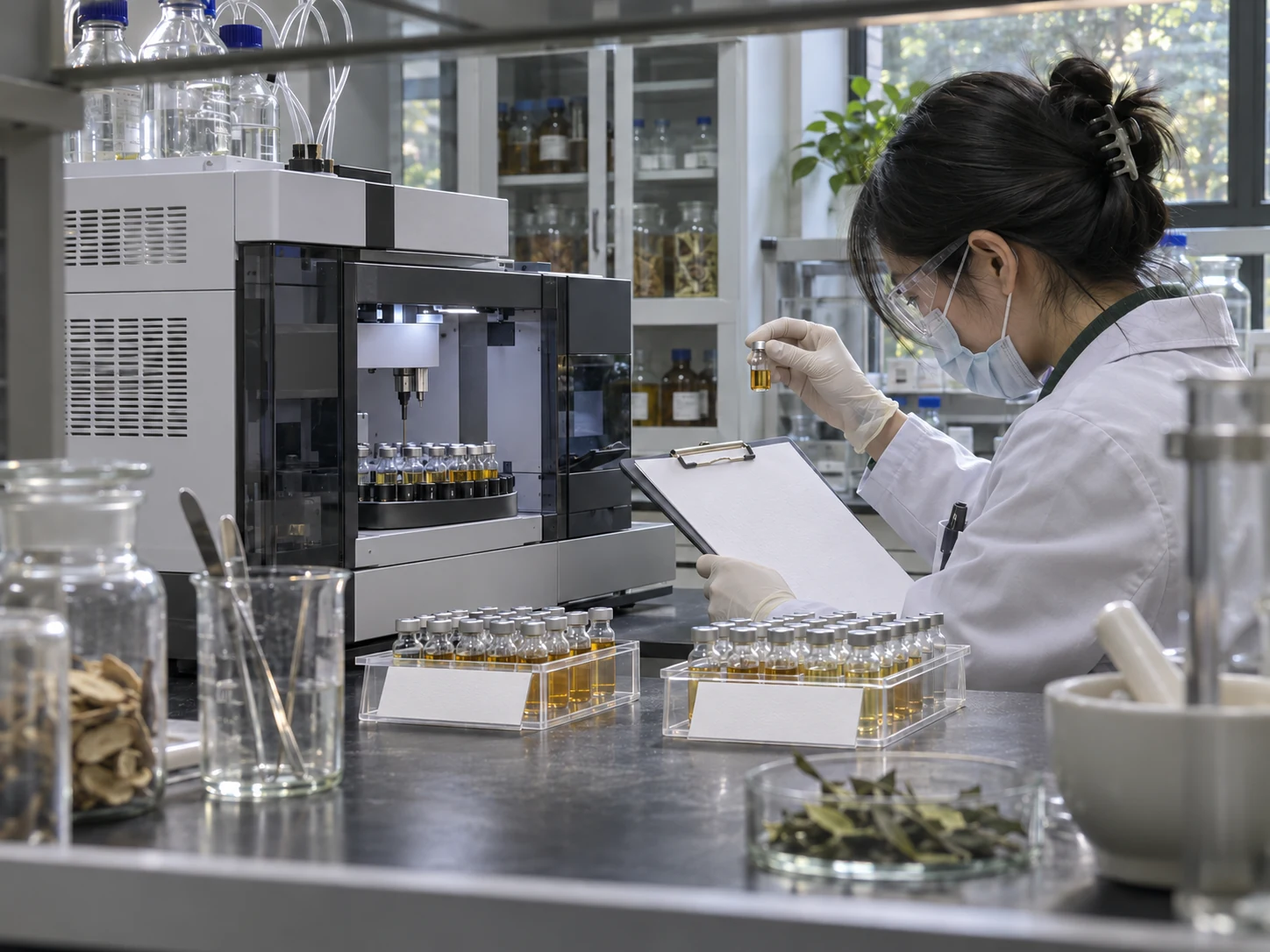
The first is established through analytical and production studies.
The second, depending on the product type and claimed action, requires separate pharmacological, clinical, and regulatory evidence.
The October JIMON GROUP award relates primarily to the first area — production technologies and quantitative raw material control.
This is the confirmed content of the news.
When a medicinal plant becomes part of exact science
The story of this development makes one look differently at the familiar expression “traditional medicine.”
Usually, it evokes images of ancient recipes, medicinal herbs, manuscripts, and centuries of experience.
But modern production adds completely different tools to this picture.
Analytical instruments. Laboratory standards. Digital journals. Traceability systems. Mathematical models. Control of technological parameters.
As a result, the plant remains a natural raw material, but working with it becomes increasingly technological.
And here an interesting paradox arises.
The more complex the natural material, the more important the science’s ability to measure it.
That is why I was interested in the October JIMON GROUP award.
Not because the company received another diploma.
But because behind it was found a real sequence of research, cooperation between production and academic environments, reports of first results, and a task significant for the entire medicinal plant raw materials industry.
A centuries-old tradition does not cease to be a tradition when a chromatograph or digital control system appears in the laboratory.
But it gains new opportunities for verification, standardization, and development.
And perhaps here lies one of the most interesting boundaries of modern phytopharmacy.
Between knowledge of how the plant was used for centuries and the scientific ability to establish exactly what is in each produced batch of raw materials.
The JIMON GROUP award in Anguo is a small but documented episode of moving across this boundary.
And the further history of the project will depend no longer on competition evaluations but on specific published results.
It is those that I will continue to follow.
Sources and documents
- CNR, October 20, 2026m.sohu.com
- JIMON GROUP, October 22, 2026jinmujituan.cn
- Detailed corporate publicationzxfull.com
- Chengde Medical Institute, June 2026zy.cdmc.edu.cn
- Great Wall Network, May 26, 2025bd.hebccw.cn
- State Administration of the PRC — GAPforestry.gov.cn
- Chinese Pharmacopoeia 2025: Overview of Changesm.cnpharm.com
Research keys
Browse the topic archives for this article.