The launch of the Xiaozhi AI platform in Hong Kong is more than the release of another application. It is an attempt by JIMON GROUP to bring thirty years of experience in Traditional Chinese Medicine into a digital format. I looked at what has actually been announced, what can be confirmed through external sources, and where the available evidence ends.
On 15 June 2026, JIMON GROUP officially launched the Xiaozhi (小智) AI platform in Hong Kong — a digital health-management service built around the principles of Traditional Chinese Medicine (TCM). The most striking detail of the announcement is the promise of “intelligent diagnosis in 10 seconds”. And that is precisely where the main question begins.
What Has Been Announced — and How Should It Be Interpreted?
According to company materials, Xiaozhi uses artificial intelligence to analyse aspects of a person’s health, including through a photograph of the tongue — one of the traditional methods of examination in TCM — and generates personalised prevention and wellness plans.
Four functional areas have been described:
- Visual presentation of health-related data in a format understandable to both practitioners and patients.
- Access from two devices, with round-the-clock intelligent question-and-answer support.
- Prevention and support plans designed to cover the full health-management journey.
- Joint development with a laboratory bringing together the experience of hundreds of practising TCM professionals.
“10 seconds” is a powerful headline, but the number itself does not tell us what the system actually produces in that time: a preliminary assessment, a structured recommendation, or a medical conclusion. The announcement does not clarify this, so I do not treat it as an established fact.
The most accurate way to describe Xiaozhi at this stage is as a digital health-management tool, not as a replacement for a doctor’s diagnosis.
What Has Been Independently Verified?
Reports about the presentation in Hong Kong on 15 June 2026 confirm that the launch was a public event, not merely an internal company announcement.
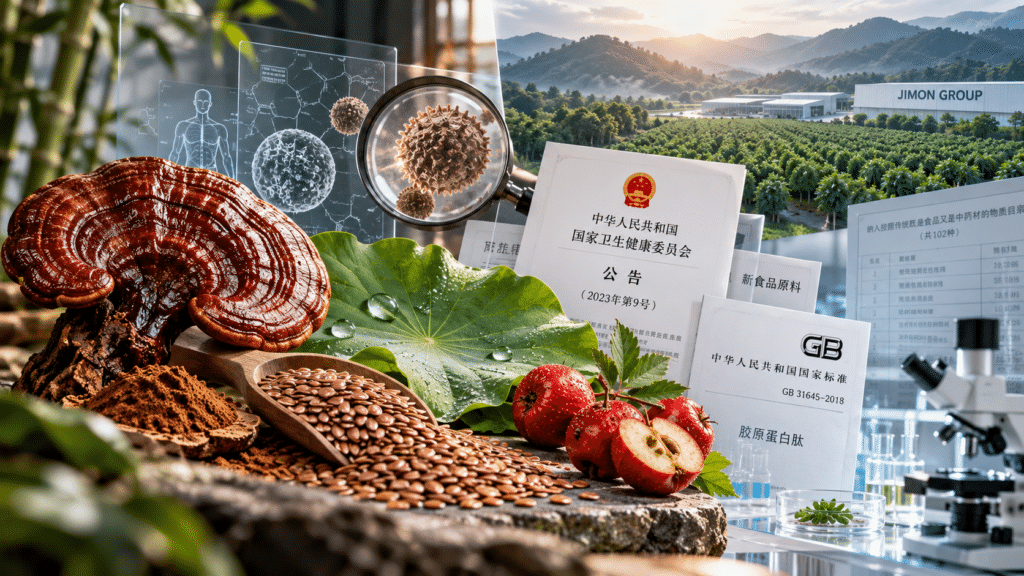
The industrial background of the organisation is also important. JIMON GROUP has been active in the field of TCM since 1993 — more than thirty years of research, manufacturing and sales of herbal preparations and health products, supported by its own development centre.
In my view, this is where the most interesting aspect of the story lies.
Xiaozhi is not a start-up that has simply entered a fashionable technology trend. It is a digital layer built on decades of accumulated expertise: formulation knowledge, production infrastructure and laboratory practice.
A foundation of this kind cannot be created in a single year. And this is precisely what distinguishes the launch from many wellness applications that simply incorporate AI.
It is important, however, to keep two things separate: the group’s industrial and research background provides the context for understanding the platform’s development, but it does not by itself prove the diagnostic accuracy or clinical effectiveness of Xiaozhi. Those questions require their own evidence.
The Industry Context: Why Is This Moment Important?
The wider context helps explain the logic behind this step.
According to figures from China’s National Health Commission, by July 2025, TCM methods were practised in 196 countries and regions, while acupuncture was recognised in 113 WHO member states.
At the same time, estimates from Exactitude Consultancy placed the global artificial intelligence in medicine market at approximately US$16.5 billion in 2024, with a forecast of around US$45 billion by 2034.
Two major trends — the international expansion of TCM and the digitalisation of medicine — are converging in the very area where Xiaozhi is being developed.
One qualification is essential: market size proves nothing about the quality of a particular product. It simply shows that the company is entering a real and growing market segment, rather than an invented one.
What Could This Change?
For a practising doctor or a business partner, the interesting point is not the slogan but the architecture:
TCM diagnostic tradition + AI processing + data visualisation + continuous support.
If the announced connection with the laboratory and clinical experience is implemented as described, Xiaozhi could become more than just another “health app”. It could serve as an entry point into a full-cycle health-management system supported by the group’s existing pharmaceutical infrastructure.
With this launch, JIMON GROUP appears not simply as a company introducing a single new product, but as an organisation gradually building a connected chain: from organic plantations and production to laboratory research and, now, a digital service.
This systematic development is reflected in the chronology of the group’s activities, not merely in advertising language.
What Remains an Open Question?
There is one question this article deliberately leaves unanswered:
How exactly has the accuracy of the AI analysis been validated? What clinical data were used? What was the size and composition of the test sample? Were the results assessed independently?
Until this information becomes publicly available, the claimed accuracy should be treated as a statement made by the company, not as an established fact.
This is the next research step — and one worth following.
Sources: JIMON GROUP’s official materials concerning the Xiaozhi launch in Hong Kong (15 June 2026); corporate information from Hebei Jimon Pharmaceutical Group; China’s National Health Commission (July 2025); Exactitude Consultancy, Artificial Intelligence in Medicine Market – Forecast to 2034.
Research keys
Browse the topic archives for this article.